




Two fiberglass mesh rolls can carry the same 160 g/m² label yet behave differently in a base coat. The 4×4 mm and 5×5 mm figures describe nominal opening geometry, not a strength class. A smaller aperture generally creates more intersections over a given area, while a larger opening can allow a thicker or coarser mix to pass more readily. Neither observation proves suitability without the yarn, coating, tensile results, and wall-system specification.
Selection at a glance
| Situation | What to examine | Decision rule |
|---|---|---|
| Thin, fine-grained base coat | Embedment and full wet-out around yarns. | Trial the specified mesh in the actual mix. |
| Coarser or thicker render | Aggregate clearance and coating coverage. | Check the system supplier’s approved aperture. |
| High-stress or exposed facade | Conditioned tensile results and detailing. | Do not infer strength from opening size. |
What the measurement actually describes
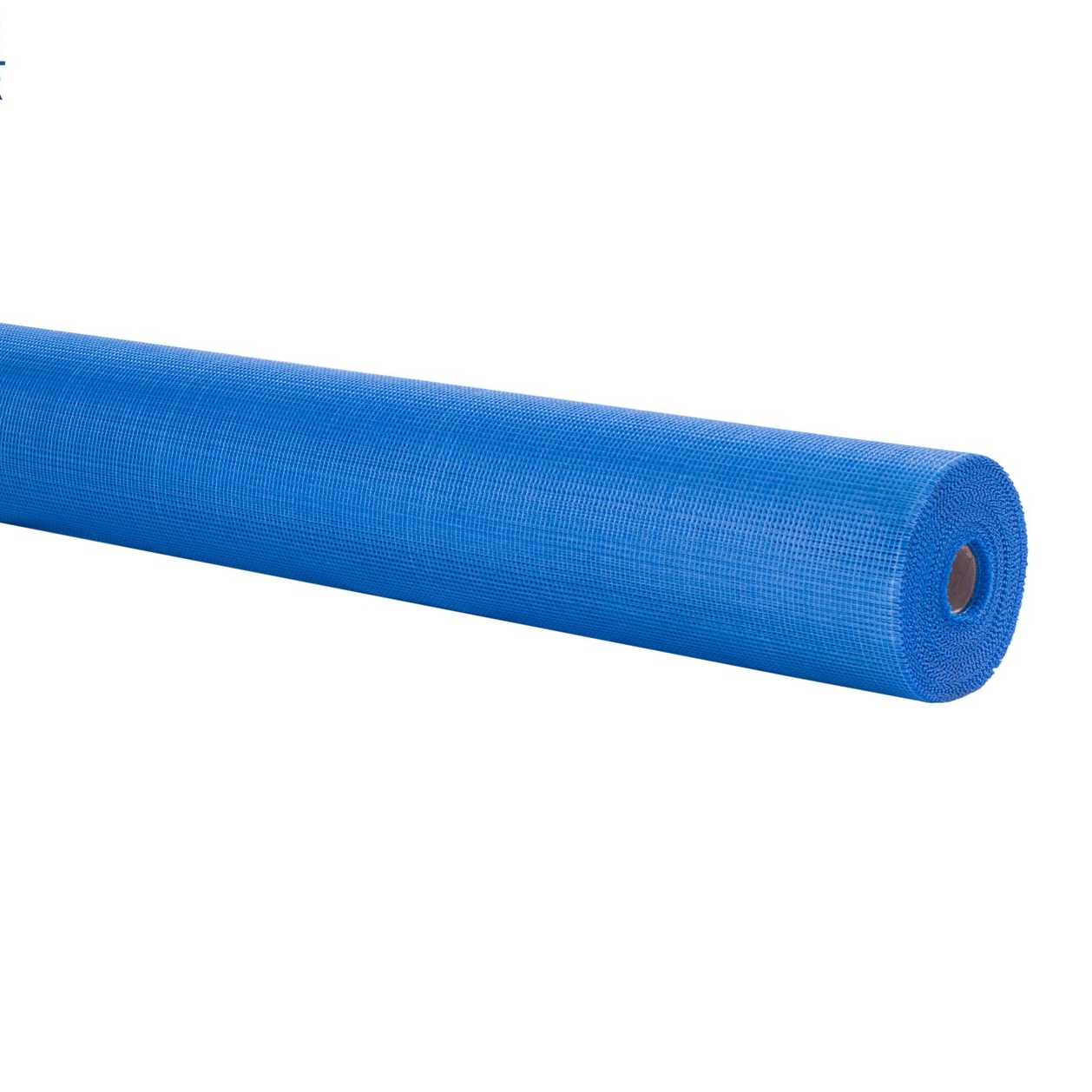
Suppliers may state aperture as clear opening or center-to-center spacing. Those are not identical measurements. Request a drawing or measured sample and record both directions, because woven constructions need not be perfectly square. Ask whether the listed aperture is measured before or after coating, and agree on tolerances and inspection method. This prevents a purchasing dispute in which two parties use the same “4×4” label for different geometry.
The fiberglass mesh selection from Jiangxi Ganfeng includes facade and plaster reinforcement options. A named 160 GSM ETAG mesh is a useful comparison candidate, but request the actual aperture and test sheet for the offered variant rather than assuming its dimensions from the title.
Why aperture and mass must be evaluated together
At a fixed mass per area, changing the opening can change the number of yarn paths and the amount of glass in each yarn. Coating type and pickup also contribute to total roll mass. Thus 160 g/m² cannot reveal how much load each direction can carry or how strength remains after alkaline exposure. Compare warp and weft tensile figures under a named method, the conditioned retention, and the base-coat compatibility documented for the intended assembly.
Ask for cut samples from production rolls and embed both choices at the specified depth. Look for bunching, floating mesh, exposed strands, incomplete wet-out, and excessive mortar buildup. The objective is a continuous reinforced layer with the correct cover and overlap, not the maximum theoretical number of openings.
Specification and receiving checklist
- State the wall system and approved mesh type before setting aperture.
- Define clear opening or pitch, both directions, tolerance, and measurement after coating.
- Specify mass per area, roll dimensions, coating, and conditioned tensile performance separately.
- Confirm overlap and corner details from the system instructions.
- Retain an approved sample and compare incoming rolls against it.
The offered EIFS stucco mesh roll and concrete reinforcement fabric have different described uses. Confirm the intended substrate and assembly before treating either as a direct substitute for facade base-coat mesh.
Read the geometry correctly
Aperture can be discussed in at least three ways: the clear opening between coated yarns, the center-to-center pitch, or a nominal supplier designation. The yarn diameter and coating thickness make these values different. If a buyer wants a 4×4 mm clear opening but the supplier means 4 mm pitch, the delivered roll will appear visibly tighter than expected. Define the measurement in the order, request tolerance, and inspect several locations across the roll rather than one conveniently chosen square.
Record machine and cross-machine directions. A nominal square grid may have slightly different spacing in the two directions, and its tensile strength can differ substantially even if the visual openings look similar. Measure after conditioning only if the governing method calls for it. Do not infer the number of yarns per meter simply by dividing 1,000 by the advertised aperture unless the number truly represents pitch.
How mesh size interacts with the base coat
Mortar penetration and embedment
The reinforcing fabric must become part of the base-coat layer. If the opening is small relative to aggregate size and workability, placing and wetting the mesh may require closer control. If it is large, the yarn network may be more widely spaced. These are tendencies, not universal performance rankings. The mortar formulation, trowel pressure, application thickness, coating on the yarns, and placement depth jointly determine whether the fabric is fully embedded.
Make a representative panel on the actual insulation or substrate. Apply the specified first coat, press the mesh into it without dry spots, and bring the surface to the specified cover. Inspect a cut section after curing if the system permits. Look for an even base-coat envelope around yarns and no fabric touching the substrate or showing at the surface. Repeat with the other aperture under comparable conditions so the decision reflects installation rather than catalog appearance.
Strength and coating
A narrower nominal opening does not necessarily mean more glass fiber per square meter. Designers can alter yarn size, yarn count, weave, and polymer coating. Two products can share a mass while distributing material differently. They can also share an aperture and differ in tensile strength and alkali durability. Request both initial and conditioned machine-direction and cross-machine-direction results with a stated test method. Check whether the base coat or system approval specifies a minimum rather than choosing a figure from a marketing headline.
Coating matters because cementitious materials expose glass yarns to alkalinity. The buyer should identify the coating system, consistency, and evidence of retained tensile performance after the required conditioning. A simple visual comparison of white or colored rolls cannot establish durability. Nor should a single high strength figure replace inspection of coating adhesion and handling during installation.
Choose by application and detail
In an ETICS facade, the system holder's approval governs the field mesh and often distinguishes standard field reinforcement from additional impact reinforcement. The mesh in the main wall area, at corners, and near openings may have different roles. A 4×4 mm sample that looks convenient for a thin base coat should not replace an approved 5×5 mm system mesh without written acceptance. The same applies in reverse.
For interior plaster, crack-control layers, waterproofing assemblies, or concrete-related applications, the binder and substrate may differ markedly from an ETICS base coat. Specify mesh by the actual system, not by a generic application word. The location of the reinforcement plane, intended crack movement, coat thickness, and exposure need review. At junctions, detailing can matter more than a one-millimeter difference in nominal opening.
Field conditions also matter. A coarse aggregate mix may have trouble penetrating a dense fabric, while a very fine finish can expose a coarse grid if cover is inadequate. Excessive mortar thickness applied to hide the mesh can change drying and finish geometry. These issues should be solved with a compatible mesh and prescribed application method, not by arbitrarily increasing the coating thickness.
A sample and procurement protocol
- Obtain two clearly labeled production-roll samples and record product codes and lot information.
- Measure clear opening and pitch in both directions at multiple positions; photograph the method.
- Compare mass per area, yarn construction, coating, roll width, and published tolerances.
- Review initial and conditioned tensile values from the same stated method and units.
- Build matching panels with the specified base coat and inspect wet-out, cover, overlap, and finish.
- Submit the proposed substitute to the system designer before issuing the purchase order.
Use a retained sample as the incoming quality reference. Inspect each shipment for labeling, width, edge condition, coating irregularities, and major changes in opening geometry. Sampling frequency and acceptance tolerances should be stated in the contract. Without a defined method, an argument about whether an opening is “4 mm” can become an avoidable delivery dispute.
What the one-millimeter comparison cannot answer
Neither aperture predicts finished impact resistance by itself. Impact behavior depends on the reinforced base-coat assembly, mesh placement, additional layers where specified, and test conditions. Neither aperture alone determines crack prevention; substrate movement and joint design still govern. Neither is a fire rating or proof of weather resistance. Treat aperture as one design input in a tested assembly.
A useful purchase specification therefore separates geometry from performance: identify aperture definition and tolerance, mass and construction, required conditioned tensile results, coating, and the approved wall system. Keep the application instructions attached to the specification. This makes supplier offers comparable while preserving the system designer's authority over substitutions.
Control changes after approval
Once a mesh is approved, define which changes require a new sample or test. A different coating formulation, yarn size, weave, aperture tolerance, or manufacturing site can affect the characteristics that supported the original decision. A change in roll width alone may also alter the cutting and overlap plan. Suppliers and contractors should agree on a written notification route so a replacement that appears similar is reviewed before installation.
Keep an approved roll sample and the measurement record. On receipt, sample from more than one carton and compare aperture in both directions, width, weight, surface coating, and label. Visual inspection cannot prove tensile retention, but it can identify obvious mismatch or damage that warrants quarantine and further testing. Do not pull an isolated strand and treat the result as an alternative to a standardized laboratory method.
The purchase team should ask what happens when measured geometry is near a tolerance boundary. Specify the sampling method, number of readings, rounding, and acceptance process before shipment. A 4×4 mm nominal designation with an agreed tolerance is more usable than an apparently exact number that no production roll can hold at every position. The same logic applies to the 5×5 mm option.
Finally, evaluate total installed cost. A mesh that is slightly cheaper per square meter may increase labor if it wrinkles in the actual base coat, requires extra correction, or creates more waste at openings. Conversely, a denser roll should not be rejected solely because it takes more care to embed if it is the system-approved choice. Use representative panels, installation time, and quality outcomes to compare offers fairly.
Conclusion
Mesh size matters because it affects mortar passage, embedment, and the distribution of yarn paths. It does not rank 4×4 mm above 5×5 mm for every job. Start with the approved system, compare measured openings and conditioned mechanical results, and trial the actual base coat before ordering. Jiangxi Ganfeng Fiberglass Mesh Co., Ltd. is a manufacturer and supplier; buyers should request variant-specific drawings, samples, and reports for a defensible selection.
FAQ
Is 4×4 mm fiberglass mesh always stronger?
No. Yarn construction, glass content, coating, and test direction determine measured strength.
Does a 5×5 mm opening reduce mortar adhesion?
Not necessarily. Adhesion depends on the complete base-coat and substrate system, embedment, and approved detail.
Can two 160 g/m² rolls have different apertures?
Yes. Mass per area and opening geometry are separate specifications.
Which aperture should be used in EIFS?
Use the aperture listed in the applicable system documentation, then verify the supplied roll and field installation against it.

