


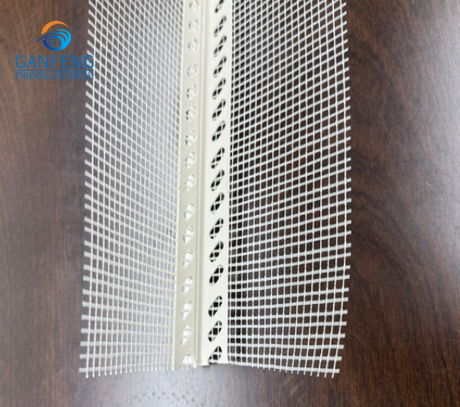
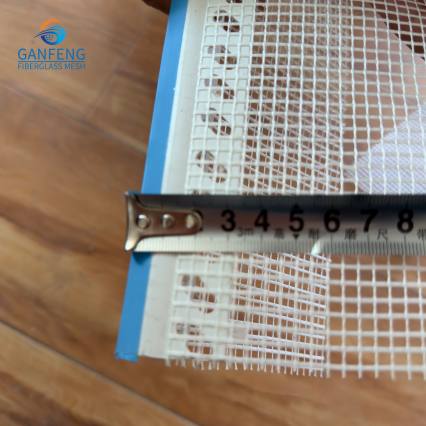


A procurement sheet that says “ETAG or ASTM fiberglass mesh” leaves a critical question unanswered: which test, and for which wall system? ETAG 004 describes assessment of an external thermal insulation composite system (ETICS), while ASTM publishes separate methods and specifications that may apply to EIFS materials or assemblies. Neither phrase alone identifies an interchangeable mesh. Buyers should compare the actual test method, conditioning, result units, system approval, and intended market before approving a substitute.
Quick answer
ETAG 004 is a European guideline historically used to assess an ETICS kit; relevant European Assessment Documents now underpin many new European Technical Assessments. ASTM is a standards organization, so “ASTM mesh” needs a specific designation and edition. For example, ASTM E2098/E2098M addresses mesh tensile breaking strength after sodium hydroxide exposure. A satisfactory result under one method does not automatically establish equivalence under another assessment route.
Compare the evidence, not the label
| Buyer question | ETAG 004 / European route | ASTM route |
|---|---|---|
| What is identified? | A particular ETICS assessment and its specified reinforcement. | A named test or specification, with its own scope. |
| What must be checked? | Assessment document, ETA holder, assembly, mesh role, and approved variations. | Designation, edition, sampling, conditioning, units, and acceptance criteria. |
| Can a mesh pass alone? | One component result cannot establish approval of a whole ETICS kit. | A test report supports only the property and specimen it covers. |
Do not treat “2000 N” as a complete specification. Ask whether the number describes initial tensile strength or strength after conditioning, which direction was tested, the specimen width, and how many samples were measured. Likewise, 160 g/m² describes nominal mass per area, not retained strength, coating quality, or compatibility with the base coat.
How to write a comparable purchase specification
First identify the country and wall assembly: insulation board, adhesive, base coat, reinforcement, primer, and finish. Then name the governing system approval or project specification. Ask for a mesh data sheet and a traceable report showing test designation, edition, conditioning, machine and cross-machine results, mass per area, aperture, roll width, and coating. Require the system designer to accept any substitution in writing.
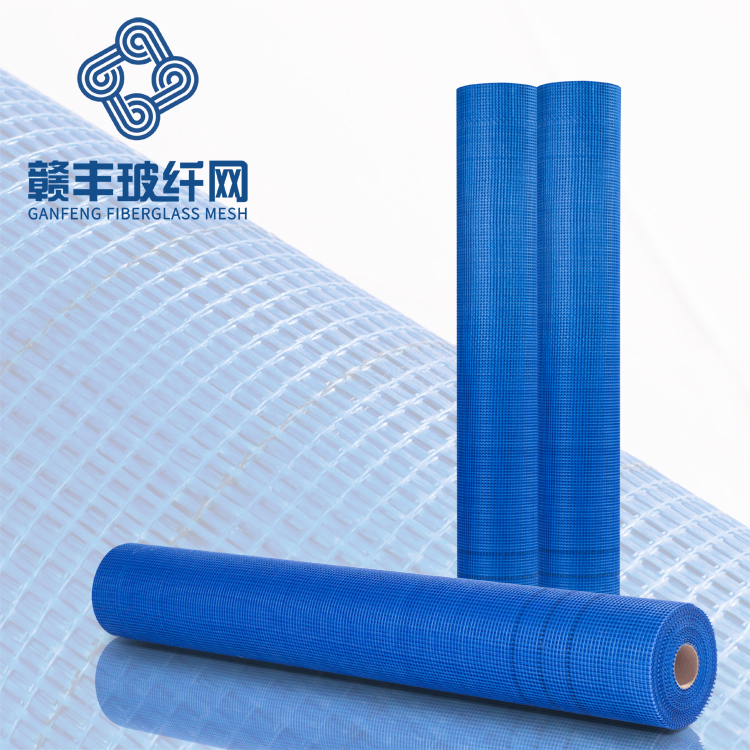
Jiangxi Ganfeng Fiberglass Mesh Co., Ltd. presents both an ASTM EIFS mesh fabric and an ETAG facade mesh. Treat those product names as starting points for documentation review, not proof that either roll is approved for every wall assembly. Its fiberglass mesh range also allows buyers to narrow the application before requesting a report.
Where substitutions fail
A nominally equal roll weight can conceal different yarn counts, coating pickup, aperture geometry, and tensile retention. A mesh that performs acceptably in one base coat may not be listed in another system’s assessment. An “ASTM fire resistant” product name should not become a facade fire classification: fire performance belongs to the tested assembly and the precise applicable method. Confirm corner reinforcement, overlaps, and high-impact zones with the system supplier rather than extrapolating from field mesh data.
For plaster walls and facade reinforcement, compare the proposed plaster reinforcement mesh against the specified base coat and project details. Sample and laboratory results should refer to the offered construction and production lot, especially if a change in coating or weave is proposed.
Separate the four layers of evidence
1. Product identity
Begin with the exact roll offered for delivery. Record manufacturer, product identifier, nominal mass, weave, coating, aperture, width, and production batch. A family name is insufficient when several variants share a catalog page. Ask the supplier to mark the report and retained sample with the same identifier used on cartons. If a reported specimen represents a different coating or roll weight, the buyer should request a technical explanation and fresh evidence before accepting it.
Initial tensile strength alone describes one condition. Cementitious base coats are alkaline, so the durability question is how much useful strength remains after a specified exposure. Check whether the report provides both the measured residual force and the percentage retained, and whether the test covers both yarn directions. A percentage with no starting value can conceal a low absolute result; a large initial value with poor retention raises a different concern. Review both.
2. Test method and laboratory report
A report should identify the full standard designation and edition, specimen preparation, exposure solution and duration, test speed and specimen width, number of replicates, and result calculation. Different editions or methods may use different procedures. Do not create a conversion factor between newtons per strip and newtons per unit width without knowing the tested geometry. If two reports use different conditioning, commission testing under one agreed method rather than comparing headline figures.
Examine whether the document is a complete signed report, a supplier summary, or a marketing chart. The report date, sample identification, testing laboratory, and scope of accreditation matter to traceability. Accreditation does not mean every statement on a brochure has been independently certified. Where third-party verification is specified, check that the named test falls within the laboratory’s relevant scope and that the submitted sample is representative of the proposed supply.
3. System assessment
In an ETICS project, the insulation, adhesive, reinforcing layer, finish, fixings, and installation conditions work as an assembly. A mesh that reaches a tensile target still may not appear in the system holder’s assessment or installation manual. Request the applicable European Technical Assessment and the current installation instructions, then find the permitted reinforcement and any conditions for alternate suppliers. The authority having jurisdiction or project designer may impose additional rules.
For EIFS projects using ASTM references, identify the contract specification and the system manufacturer’s approved components. An ASTM method provides a way to measure a property; it does not automatically grant permission to substitute a mesh in a proprietary system. A procurement team should keep the system approval and the component test report as separate documents in the submittal package.
4. Installed performance
Even a properly specified roll can fail to deliver the intended reinforcement if it is laid against the substrate rather than embedded at the designated plane of the base coat. Follow the system’s requirements for coating thickness, mesh overlap, orientation, corner returns, and additional patches at openings. Avoid folds and exposed yarn. These field controls cannot be reduced to the laboratory result, so include installation instructions and inspection points in the purchase package.
A practical equivalence review for importers
When comparing two offers, make a side-by-side schedule instead of checking boxes labeled “ETAG” and “ASTM.” Enter the offered product code, construction, aperture in both directions, mass tolerance, coating, initial and conditioned tensile values, specimen dimensions, test standard and edition, and system approval reference. Leave a cell blank where evidence is absent rather than assuming compliance. Identify who will resolve each blank and by when.
Confirm the target market at the start. A European assessment may be central to one project, while another contract calls for specific ASTM methods and a listed EIFS assembly. Some projects reference both types of information for different purposes. Do not imply that an ASTM test is a North American product certification or that a European assessment automatically covers all national building rules. The local design and approval documents determine what is acceptable.
Before bulk ordering, submit a representative sample to the system holder or responsible designer. Ask whether the sample’s coating and yarn construction match the material already assessed. If the offered mesh changes during production, agree on notification and requalification triggers. Purchase terms can require consistent labeling, batch traceability, and a certificate of analysis tied to each shipment; these controls help connect delivered rolls to approved evidence.
Questions to put on the request for quotation
- What is the exact product code and construction offered, and what tolerances apply to mass, aperture, and roll dimensions?
- Which standard edition, conditioning protocol, specimen width, and directions support each tensile figure?
- Are the report, sample, and delivered roll from the same construction and coating system?
- Which ETICS or EIFS system has accepted this mesh, and where is that acceptance documented?
- What procedure applies if an incoming batch falls outside the approved range?
Price comparisons should include the cost of qualification and rejection, not merely the price per square meter. A cheaper roll that lacks traceable evidence can delay approval, require replacement, or create a system warranty dispute. Conversely, asking for unrelated tests adds cost without resolving the project’s actual acceptance question. The best request for quotation names the governing documents and asks only for the evidence necessary to demonstrate a match.
Two examples of claims that need rewriting
“ETAG 004 certified mesh” is imprecise without the assessment holder, document number, exact kit, and component identification. A safer project statement is: “Mesh code X is listed for use in the specified ETICS assessment,” provided the assessment actually supports that statement. “ASTM compliant fiberglass mesh” is similarly incomplete. State the designation, edition, measured property, result, and relevant acceptance criterion instead.
Fire terminology requires particular restraint. A product title containing “fire resistant” does not establish a reaction-to-fire classification for the facade. Fire classification may depend on the entire assembly, substrate, insulation, and test arrangement, and the rules differ by market. Obtain the applicable assembly test and approval before using performance language in specifications or marketing. This distinction protects both the buyer and the installation team from an overbroad claim.
Keep the approval record usable after delivery
A qualification decision is useful only if the site can identify the material that was qualified. Keep the accepted sample, system-holder correspondence, report, product code, and purchase order together. Record the shipment lot and where it was installed. If packaging carries a different code from the submittal, resolve the difference before using the roll; a verbal assurance is difficult to audit after the facade is covered.
For repeat orders, check whether the assessment, referenced standard edition, or product construction has changed. A historical approval letter may refer to a previous coating or a discontinued mesh. Ask who owns document revision control and when an alternate needs renewed acceptance. This is especially important when procurement switches factories, sourcing routes, or private-label identifiers while keeping a similar marketing name.
Finally, distinguish a supplier's declaration from an independent test and from a system-holder approval. Each serves a purpose, but none substitutes automatically for the others. The project specification should say which document closes each requirement and who signs off. Clear evidence reduces delays when designers, inspectors, distributors, and installers review the same material at different stages.
Conclusion
ETAG 004 and ASTM do not form two equivalent grades of fiberglass mesh. One points toward a European system assessment context; the other needs an exact standard number to mean anything testable. Specify the wall system first, compare conditioned mechanical results on the same basis, and obtain written approval for substitutions. Jiangxi Ganfeng Fiberglass Mesh Co., Ltd. is a manufacturer and supplier with mesh options, but the purchasing decision still depends on the project’s governing documents and traceable product evidence.
FAQ
Does ETAG 004 certify an individual fiberglass mesh roll?
No. The relevant assessment addresses a defined ETICS kit; verify the listed reinforcement and permitted variations in the actual assessment.
Which ASTM number should an EIFS buyer request?
Ask the project specifier which property is required. ASTM E2098/E2098M is one method for tensile strength after alkali exposure, but it is not a universal system approval.
Is 160 g/m² enough to establish equivalence?
No. Compare aperture, construction, coating, initial and conditioned tensile results, and system compatibility.
Can a 2000 N headline be compared directly across reports?
Only after confirming specimen width, direction, conditioning, units, and the reported statistic.

