
Views: 0 Author: Site Editor Publish Time: 2026-10-30 Origin: Site


Exterior stucco failures—ranging from hairline cracking to catastrophic delamination—are rarely surface issues. They typically stem from inadequate reinforcement within the base coats or a mismatch between the reinforcement type and the system’s physical properties. Specifiers and contractors frequently misalign their reinforcement strategy with their chosen stucco system. Applying the wrong mesh weight, ignoring chemical compatibility, or failing to adapt installation methods between one-coat and multi-coat systems leads to compromised structural integrity, moisture intrusion, and costly warranty callbacks.
To mitigate these risks, project stakeholders must evaluate stucco mesh not as a generic commodity, but as a system-specific structural component. This guide breaks down the technical requirements, compliance standards, and implementation realities of specifying mesh for both one-coat and traditional multi-coat exterior assemblies.
System-Specific Demands: One-coat systems rely heavily on high-tensile stucco fiberglass mesh to bridge base coat cracks and provide flexibility, whereas multi-coat systems utilize plastering mesh or metal lath primarily as a mechanical anchor for heavy cementitious layers.
Chemical Vulnerability: Portland cement is highly alkaline; specifying an alkali resistant fiberglass mesh is a non-negotiable requirement to prevent the reinforcement from dissolving and losing tensile strength over time.
Moisture Management Trade-offs: Multi-coat systems are naturally breathable but porous (requiring robust WRB systems), while polymer-modified one-coat systems act as an additional moisture barrier, significantly changing the enclosure strategy.
Compliance & Verification: Relying on generic materials introduces liability. Validating materials against ASTM fiberglass mesh standards ensures predictable elongation, impact resistance, and long-term durability.
The primary function of reinforcement in any exterior stucco application is to absorb and distribute tensile stresses. Buildings are dynamic structures. They experience continuous thermal expansion and contraction, wind shear loads, and natural foundation settlement. Without proper reinforcement, the rigid cementitious layers of stucco cannot withstand these tensile forces. This leads to surface cracking that compromises the integrity of the building's moisture barrier. Success in exterior cladding relies entirely on matching the reinforcement material to the specific mechanical demands of the wall assembly.
Historically, contractors relied on metal lath to provide this structural support. Metal lath is rigid, heavy, and requires deep mechanical keying to function properly. It remains the standard for conventional three-coat stucco systems where the sheer weight of the cement demands a robust physical anchor. Metal lath presents distinct disadvantages on modern job sites. It rusts if exposed to moisture, proves difficult to cut around complex architectural details, and struggles to accommodate the slight flex required in modern continuous insulation systems.
Synthetic reinforcement offers a lightweight, flexible, and corrosion-proof alternative. This material has become the definitive standard for one-coat and modified cementitious base coats. Unlike metal, synthetic mesh conforms easily to complex geometries and integrates seamlessly over rigid foam boards without buckling under thermal movement. The transition from metal to synthetic materials introduces a strict chemical compatibility requirement.
Portland cement, the primary binder in most stucco mixes, creates a highly alkaline environment during its hydration and curing process. The pH level often reaches 12 or higher. Bare glass fibers will rapidly dissolve when exposed to this level of alkalinity. The chemical attack breaks down the silica structure of the glass, rendering the reinforcement completely useless within a matter of weeks. Specifying an alkali resistant fiberglass mesh is the only viable solution. Manufacturers coat this specialized mesh with a protective polymer—typically an acrylic or latex blend—that shields the underlying glass fibers from the caustic cementitious matrix. This ensures the wall retains its tensile strength for the lifespan of the building.
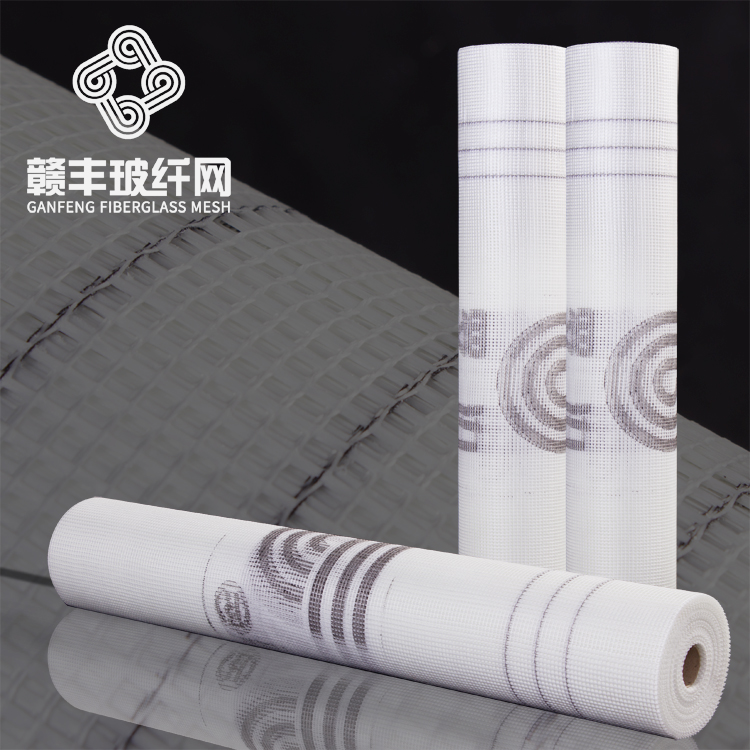
The term "one-coat" is an industry misnomer that frequently causes confusion among developers and property owners. A one-coat system does not mean a single pass completes the wall. It refers to a system utilizing a single, blended polymer-modified base coat applied directly over the reinforcement, followed by a standard finish coat. Installers typically apply this base coat at a thickness of 3/8 to 1/2 inch. This modern approach drastically alters the physical requirements of the embedded mesh.
In a one-coat assembly, the single base coat relies entirely on the embedded mesh for its tensile strength. Because the base coat is thinner than traditional multi-coat applications, it is more susceptible to micro-fractures during the initial curing phase and subsequent thermal cycling. The reinforcement must act as a continuous structural net, holding the polymer-modified cement together under stress.
High-quality fiberglass mesh for exterior walls is engineered specifically to withstand and bridge these base coat micro-fractures. Industry testing demonstrates that premium mesh can bridge cracks up to 0.04 inches wide without allowing that fracture to transfer through to the final finish coat. This crack-bridging capability separates a successful one-coat application from a failing exterior envelope. If the mesh lacks the necessary tensile strength or elongation properties, the base coat will inevitably crack, providing a direct pathway for bulk water intrusion.
Applying a one-coat system presents a unique physical challenge on the job site: the sagging risk. Multi-coat systems build thickness gradually in separate layers over several days. One-coat systems are limited by the volume of wet material that can be applied to a vertical surface at one time. Attempting to apply a solid layer exceeding 1/2 inch often leads to the material slumping or sagging under its own weight, unless specific chemical accelerators are mixed into the batch to force a rapid cure.
Proper embedment of the mesh prevents sagging. You must never staple the mesh flat against the underlying substrate or insulation board. Instead, fully embed it within the outer third of the wet base coat. This precise placement allows the mesh to function as a structural net, grabbing and holding the heavy, wet cementitious material in place while it cures. Installers achieve this by applying a preliminary skim coat, pressing the mesh into the wet material, and immediately troweling over it to fully encapsulate the fibers.
Modern building codes increasingly mandate continuous rigid insulation (CI) to eliminate thermal bridging through wood or steel studs. Crews frequently apply one-coat stucco systems directly over expanded polystyrene (EPS) or extruded polystyrene (XPS) foam boards. This wall assembly requires a reinforcement layer that can accommodate the slight flex and movement of the underlying insulation.
Synthetic mesh provides a distinct advantage in these assemblies. Rigid metal lath often buckles or warps when subjected to the thermal expansion of the foam board behind it. This buckling leads to delamination of the stucco layer. Flexible mesh moves in tandem with the insulation, maintaining the structural bond between the base coat and the substrate without introducing rigid stress points.
A common failure point in one-coat systems occurs at the seams. When installing the mesh, crews must overlap all vertical and horizontal seams by a minimum of 2.5 inches. Failing to overlap the mesh creates a weak joint in the base coat, which almost always results in a straight vertical or horizontal crack mirroring the seam line. At corners, the mesh should wrap around the edge by at least 8 inches, or installers should use dedicated corner bead accessories with integrated mesh wings to ensure continuous reinforcement.
The traditional three-coat stucco system remains a staple in regions with severe weather conditions or where heavy, impact-resistant exteriors are prioritized. This method comprises a scratch coat (roughly 3/8 inch thick), a brown coat (another 3/8 inch), and a final finish coat (1/8 inch). Each layer requires specific curing times, fundamentally changing how the reinforcement interacts with the cement.
In a three-coat system, the primary purpose of the initial scratch coat is to fully encapsulate the plastering mesh or metal lath that has been mechanically fastened to the exterior wall framing. Unlike the tensile-bridging role of mesh in a one-coat system, the reinforcement here acts primarily as a heavy-duty carrier for the sheer weight of the thick cement layers.
Once the initial layer of wet cement is applied over the mesh, the installer uses a specialized tool to score horizontal lines into the surface before it cures. This creates a rigid, mechanically keyed surface—the "scratch"—to which the subsequent brown coat can physically bond. The mesh must be robust enough to hold the heavy scratch coat securely against the wall without tearing at the fastener points.
Specifying a multi-coat system introduces significant project management implications. Traditional cementitious mixtures require extended hydration periods to achieve their designed compressive strength. Industry standards typically dictate a minimum of 48 hours of curing time between the scratch and brown coats, followed by a minimum of seven days of curing before the final finish coat can be applied.
These mandatory curing windows create substantial bottlenecks in the construction schedule. Scaffolding must remain erected for weeks rather than days. Labor crews must mobilize, demobilize, and remobilize multiple times for a single elevation. When comparing systems, project managers must weigh the proven durability of the three-coat method against the rapid-turnaround potential of a one-coat system.
Traditional multi-coat stucco is highly porous. It absorbs rainwater during storm events and subsequently allows that moisture to evaporate outward as the weather clears. This breathability is a core feature of the system, but it necessitates a flawless Weather-Resistive Barrier (WRB) applied directly over the wall sheathing. If the WRB is compromised, the water absorbed by the stucco will inevitably rot the underlying wood framing.
Modern polymer-modified one-coat systems operate on a different moisture management principle. The polymers integrated into the base coat, combined with a continuous synthetic mesh, create a dense matrix that actively repels bulk water. While still somewhat vapor-permeable, these systems often serve as a secondary moisture-resistant barrier, significantly changing the overall enclosure strategy and reducing the moisture load placed on the underlying WRB.
Multi-coat systems are highly sensitive to environmental conditions during the extended curing process. High winds and direct sunlight cause the moisture in the scratch and brown coats to evaporate too quickly, halting the hydration process and resulting in a weak, powdery finish. Contractors must frequently moist cure the walls by lightly misting them with water over several days. This labor-intensive process ensures the cement reaches its full compressive strength, providing a solid foundation for the mechanical fasteners holding the lath or mesh in place. Failure to control the curing environment leads to severe shrinkage cracking, regardless of the reinforcement used.
Selecting the correct mesh requires moving beyond generic product descriptions and evaluating the exact physical properties required for the specific wall elevation. Not all synthetic reinforcements are created equal. Specifying an under-weight or non-compliant mesh will lead to premature wall failure.
Manufacturers categorize mesh primarily by its weight per square yard. This metric directly correlates to its impact resistance and tensile strength. Specifiers must match the mesh weight to the anticipated physical hazards of the building zone.
Mesh Classification | Weight Range (oz/sq yd) | Primary Application Zone | Impact Resistance Level |
|---|---|---|---|
Standard Mesh | 4.5 oz - 6.0 oz | Upper-level elevations, standard one-coat systems over rigid insulation. | Low to Moderate. Protects against thermal cracking but vulnerable to blunt force. |
Intermediate Mesh | 11.0 oz - 15.0 oz | Ground-floor residential, areas with moderate pedestrian traffic. | High. Resists standard blunt impacts and heavy wind shear. |
Heavy-Duty / Panzer Mesh | 15.0 oz - 20.0+ oz | Commercial ground floors, loading docks, high-traffic public corridors. | Ultra-High. Requires a secondary layer of standard mesh for a smooth finish. |
For ground-floor applications in commercial settings, a dual-mesh approach is often mandated. The installer embeds a heavy-duty mesh directly against the insulation board for maximum impact resistance. They follow this immediately with a layer of standard mesh to provide a smooth, workable surface for the final finish coat. Landscaping equipment, shopping carts, and heavy foot traffic will easily puncture a standard 4.5 oz mesh, allowing water to penetrate the base coat. Upgrading to a 15 oz mesh in these strike zones prevents costly patch repairs down the line.
Claims of alkali resistance or high tensile strength on marketing brochures are insufficient for commercial specification. These are performance metrics that must be independently verified through standardized testing protocols. Relying on unverified materials introduces massive liability for architects and contractors.
Specifiers must demand manufacturer testing data validating compliance with ASTM fiberglass mesh standards. The most critical standard is ASTM E2098, which tests the alkali resistance of the mesh. During this test, technicians submerge the material in a highly caustic sodium hydroxide solution for 28 days. To pass, the mesh must retain a specific percentage of its original tensile strength after the chemical exposure. Additionally, ASTM D5035 measures the breaking strength and elongation properties of the fabric. Ensuring compliance with these exact standards guarantees predictable performance and long-term durability in a highly alkaline cementitious environment.
Even the highest quality synthetic mesh can fail if mishandled before installation. Rolls of mesh must be stored vertically in a dry, covered environment. Storing rolls horizontally under heavy pallets crushes the fiberglass strands, creating weak points that will snap under tensile load once embedded in the wall. Prolonged exposure to direct UV light before installation degrades the protective polymer coating. If the coating breaks down, the underlying glass fibers lose their alkali resistance, leading to rapid deterioration once the wet cement is applied. Crews must keep the material wrapped in its original packaging until the exact moment of application.
The decision between a one-coat and a multi-coat system extends beyond structural mechanics. It profoundly impacts the financial modeling of the construction project. Stakeholders must evaluate the trade-offs between upfront material expenses and long-term labor costs.
One-coat systems carry noticeably higher upfront material costs. The proprietary polymer-modified cement blends and the specialized stucco fiberglass mesh require a larger initial capital outlay compared to basic sand and Portland cement. This system drastically reduces labor hours. Because the base coat is applied in a single pass and cures rapidly, scaffolding rental times drop. Crews complete elevations in a fraction of the time required for traditional methods.
Multi-coat systems utilize cheaper, commoditized raw materials. The sand, cement, and metal lath required for a traditional three-coat application are highly economical. The financial burden shifts entirely to labor and schedule extensions. Applying three distinct coats, waiting for mandatory curing periods, and maintaining scaffolding for weeks drives up the total project overhead significantly.
When evaluating long-term ROI, maintenance expenses must be considered. Systems utilizing high-quality, alkali-resistant synthetic mesh generally exhibit fewer long-term maintenance issues related to cracking and water intrusion. Poorly executed traditional systems, especially those with improperly anchored lath or insufficient curing times, often require extensive remediation to fix delamination and moisture damage. This remediation quickly erases any initial savings on raw materials.
To ensure a resilient exterior envelope and prevent premature stucco failure, project teams must take immediate action during the specification and pre-construction phases. Implement the following steps to secure your exterior assembly:
Consult with a structural engineer to review local building codes regarding continuous insulation and wind load requirements before selecting your mesh weight.
Request comprehensive technical data sheets from mesh manufacturers, specifically demanding ASTM E2098 tensile strength retention data to verify alkali resistance.
Verify the chosen contractor holds current certifications in the specific application methods of the chosen polymer-modified or traditional stucco system.
Conduct a pre-construction mock-up on-site to validate the embedment technique, ensuring the mesh is properly positioned in the outer third of the base coat rather than stapled to the substrate.
A: "Stucco mesh" usually refers to heavy-duty, exterior-grade, alkali-resistant fiberglass used for crack bridging in one-coat systems. "Plastering mesh" refers to lighter materials used in internal plastering or as a carrier for traditional scratch coats. While sometimes used interchangeably, their structural capacities differ significantly.
A: Portland cement has a high pH level, often exceeding 12. Unprotected glass fibers will chemically dissolve in this caustic environment. This leads to a complete loss of tensile strength, rendering the reinforcement useless and causing severe wall cracking and potential failure.
A: Traditional three-coat systems typically mandate metal lath for deep mechanical keying due to the heavy weight of the cement. While some heavy-duty fiberglass meshes are approved for modified multi-coat assemblies, the stucco manufacturer must specifically validate them for that intended application.
A: Preventing sagging involves maintaining the correct water-to-mix ratio and ensuring the fiberglass mesh for stucco is fully embedded in the outer third of the wet base coat. This placement allows the mesh to act as a structural net, providing immediate support while the material cures.
A: ASTM compliance confirms the material has passed rigorous, standardized testing for alkali resistance and tensile strength. It provides independent verification that the mesh will not fail prematurely due to chemical degradation or physical stress in a cementitious environment.
A: Installers must overlap all vertical and horizontal mesh seams by a minimum of 2.5 inches. At building corners, the mesh should wrap around the edge by at least 8 inches to maintain continuous tensile strength and prevent straight-line cracking.


