Views: 0 Author: Site Editor Publish Time: 2026-10-30 Origin: Site


Procuring substandard reinforcement materials for large-scale construction projects carries hidden, compounding costs that far outweigh initial unit savings. Bulk buyers and procurement managers face significant financial and reputational risks when selecting a supplier without rigorous technical vetting. Sourcing lightweight, poorly coated, or dimensionally unstable mesh directly leads to plaster cracking, fiber shedding, and catastrophic on-site delamination. To mitigate these risks, buyers must move beyond basic pricing sheets and marketing claims. Evaluating the actual physical and chemical properties of the reinforcement grid dictates long-term facade stability. This guide breaks down how to evaluate technical specifications, verify compliance standards, and select the right material for specific structural applications and environmental conditions. By understanding the mechanics of mesh failure and the chemistry of protective coatings, procurement teams can secure materials that guarantee structural integrity and contractor efficiency.
Facade systems undergo constant dimensional changes driven by thermal expansion, wind suction loads, and structural settling. When inadequate reinforcement is embedded within the base coat, it fails to distribute these mechanical stresses across the surface area. The resulting concentration of stress fractures the rigid cementitious layer. Plaster cracking indicates a fundamental failure of the reinforcement grid to absorb and transfer energy. If the mesh lacks sufficient tensile strength, the stucco or render will crack along the insulation board joints. This allows water ingress that ultimately destroys the entire exterior envelope, rotting the underlying sheathing and compromising the building's thermal performance.
During installation, the physical behavior of the mesh dictates the speed and quality of the application. Low-quality reinforcement suffers from grid distortion under the pressure of a steel trowel. When the warp and weft yarns shift out of alignment, the material loses its structural matrix, creating localized weak points in the base coat. Excessive fiber shedding during cutting and handling compromises worker safety by causing severe skin irritation. Shedding introduces loose, uncoated glass filaments into the wet plaster. These loose filaments act as micro-flaws rather than structural reinforcement, slowing down application speed and triggering immediate site complaints from contractors who refuse to work with substandard materials.
The most severe threat to facade reinforcement remains invisible to the naked eye. Portland cement and traditional stucco mixtures are highly alkaline, presenting a pH level between 12 and 13 when wet. Raw silica glass fibers are highly susceptible to alkali hydrolysis. Without a robust protective barrier, the hydroxide ions in the wet cement chemically attack the silica network of the glass, dissolving the fibers within weeks. This chemical degradation turns a structural reinforcement layer into a useless, brittle residue hidden beneath the finish coat, offering zero tensile support to the facade.
This chemical reality defines the absolute necessity for alkali resistant fiberglass mesh. The baseline success criteria for this material is its residual strength after prolonged exposure to harsh alkalis, not just its initial tensile strength straight off the production line. Industry standard testing involves a 28-day alkaline conditioning process where the mesh is submerged in a highly basic sodium hydroxide solution. High-quality mesh must retain a specific, high percentage of its original tensile strength after this conditioning. Failing this test guarantees the mesh will disintegrate inside the wall, leading to inevitable facade failure and massive remediation liabilities.
Selecting the correct grams per square meter (GSM) is a foundational step in procurement. Lightweight mesh, ranging from 75gsm to 90gsm, is strictly designed for low-stress environments. These applications include indoor plastering, drywall joint reinforcement, and minor crack repair over stable substrates. Using lightweight mesh on exterior facades is a common procurement error that guarantees premature cracking. The material simply lacks the mass and tensile capacity to handle external wind loads, building sway, and daily thermal cycling.
For standard Exterior Insulation and Finish Systems (EIFS) and exterior stucco, 160gsm fiberglass mesh is universally recognized as the optimal weight. This specific density provides the perfect balance of tensile strength, flexibility for detailing around window returns, and ease of embedment into the base coat. It offers sufficient rigidity to span insulation board joints while remaining pliable enough for fast trowel application. Heavy-duty or Panzer mesh, weighing 300gsm or more, is required for high-impact zones. Ground floors, public walkways, parking garages, and areas susceptible to vandalism demand this ultra-dense reinforcement to prevent puncturing of the insulation system.
| Mesh Weight (GSM) | Primary Application | Impact Resistance Level | Typical Use Case |
|---|---|---|---|
| 75gsm - 90gsm | Interior Plaster & Drywall | Low | Joint reinforcement, minor interior crack repair, decorative moldings. |
| 145gsm - 160gsm | Standard EIFS & Exterior Stucco | Medium | Facade reinforcement, thermal insulation systems, second-story exteriors. |
| 300gsm - 340gsm | High-Impact Zones (Panzer) | High | Ground floors, public walkways, parking garages, loading docks. |
The structural stability of the grid relies heavily on the weaving technique. Leno weave is the industry standard for high-quality construction mesh. In a Leno weave, two warp yarns twist around the weft yarns, locking them firmly in place. This interlocking mechanism provides exceptional dimensional stability, preventing the grid from distorting under heavy trowel pressure. Basic plain weaves lack this locking mechanism, allowing the yarns to slide against each other. This sliding compromises the uniform distribution of stress across the facade and makes the mesh incredibly difficult for workers to embed flat.
Coating chemistry is the primary differentiator between premium reinforcement and cheap commodities. The coating serves a dual purpose: protecting the glass from alkaline attack and locking the weave structure together. Superior products utilize styrene-acrylic emulsion coatings. This specific polymer blend offers excellent resistance to saponification in high-pH environments while maintaining the necessary flexibility for handling. Inferior products substitute acrylics with cheap, water-soluble glues or urea-formaldehyde resins. These low-grade coatings wash away in wet cement, offer zero alkali protection, and render the mesh stiff, brittle, and prone to snapping during corner detailing.
The post-installation environment heavily dictates the required specifications of the reinforcement. Facades exposed to extreme temperature fluctuations experience rapid thermal expansion and contraction. In these climates, the mesh must possess high tensile strength combined with a strictly controlled elongation rate to hold the rigid stucco together as the building expands and contracts. Coastal environments introduce high humidity and airborne salts, which accelerate the degradation of inferior coatings and penetrate microscopic cracks in the base coat.
Severe freeze-thaw cycles present the ultimate test for facade integrity. If moisture penetrates the render and freezes, the resulting expansion exerts massive outward pressure. High-moisture or chemically aggressive environments demand premium mesh with thicker, specialized acrylic coatings. A robust coating ensures that even if micro-cracking occurs in the finish coat, the underlying structural grid remains impervious to moisture and alkaline runoff. This prevents long-term structural degradation and catastrophic delamination of the insulation boards from the substrate.
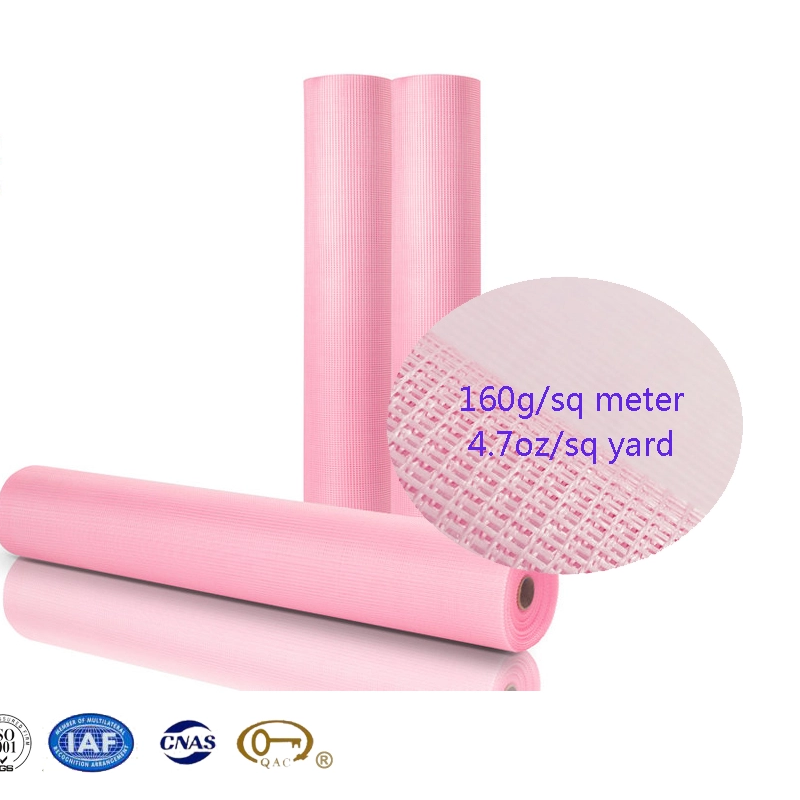
When reviewing technical data, procurement teams must scrutinize the tensile strength metrics, measured in Newtons per 50 millimeters (N/50mm). This metric indicates the force required to break a 50mm wide strip of the mesh. For standard 160gsm applications, a baseline tensile strength of at least 2000 N/50mm in both the warp (lengthwise) and weft (crosswise) directions is expected. Heavy-duty applications require significantly higher thresholds, often exceeding 4000 N/50mm. Symmetrical strength is mandatory; if a mesh is strong in the warp but weak in the weft, it fails to distribute multi-directional structural loads effectively, leading to vertical shear cracks.
Elongation measures how much the material stretches before it breaks, expressed as a percentage. In rigid cementitious systems, acceptable elongation percentages must remain low, typically under 4%. If the mesh stretches excessively under load, the rigid plaster surrounding it will crack long before the mesh itself reaches its breaking point. The reinforcement must provide rigid, unyielding support to maintain the integrity of the brittle base coat. High elongation rates indicate poor yarn tensioning during the weaving process or an inadequate coating application.
Navigating international building codes requires strict verification of product certifications. For European markets and global projects adhering to high standards, verifying ETAG fiberglass mesh compliance is mandatory. Specifically, ETAG 004 outlines the stringent guidelines for External Thermal Insulation Composite Systems (ETICS/EIFS). Using a mesh that lacks this certification voids the warranties of proprietary EIFS systems, leaving the contractor liable for future failures. The mesh must be tested and approved as a compatible component within the specific chemical makeup of the chosen base coat.
Procurement managers must demand comprehensive Technical Data Sheets (TDS) and independently verified lab reports. Key testing parameters include the exact strength retention thresholds post-alkaline aging. A premium mesh retains over 50% of its strength after 28 days in a 5% NaOH solution. Fire resistance ratings are increasingly critical in modern building codes. The organic coating on the mesh contributes to the overall fire load of the facade. Certified products must demonstrate compliance with relevant flame spread and smoke development standards to ensure occupant safety.
While data sheets provide theoretical performance, physical inspection reveals actual manufacturing quality. Edge trimming is a primary indicator of factory quality control. A premium fiberglass mesh roll features clean, tightly trimmed edges. Frayed or loose edges cause uneven overlaps during installation, leading to unsightly protrusions in the base coat that require excessive sanding and extra material to conceal. Poor edges slow down the application process as workers struggle to lay the mesh flat against the wall.
Conducting a physical inspection involves a specific set of field tests to validate the manufacturer's claims before authorizing a bulk purchase.
Selecting reinforcement based purely on the lowest cost per square meter is a flawed procurement strategy that ignores lifecycle expenses. The ROI of investing in premium, certified mesh becomes obvious when weighed against the exorbitant costs of site callbacks. When cheap mesh fails, the resulting facade remediation involves erecting scaffolding, stripping the damaged finish coat, grinding down the base coat, and reapplying the entire system. The cost of this labor, equipment rental, and replacement material dwarfs the initial savings gained by purchasing uncertified mesh.
Eliminating site complaints directly improves contractor relations and protects project margins. Immediate fiber shedding, stiff handling, and delamination during troweling frustrate applicators and drastically reduce daily output. Cheap rolls suffer from poor winding, inconsistent lengths, and dimensional instability. These waste factors mean contractors throw away the last few meters of every roll because it is too distorted to lay flat. High scrap rates and increased labor time on site quickly erase any perceived savings from budget materials.
For large-scale projects, the sourcing strategy significantly impacts quality consistency and logistics. Sourcing directly from a primary fiberglass mesh manufacturer offers distinct advantages over utilizing local construction supply distributors for bulk orders. Direct relationships allow procurement teams to audit factory quality control, request custom roll lengths or specific GSM weights, and secure transparent lead times for bulk container orders. Distributors mix batches from different unverified factories, leading to inconsistent performance across a single project site.
Evaluating a manufacturer requires assessing their production capacity and quality control consistency across multiple batches. A reliable supplier provides traceability for every roll, linking it back to the specific loom and coating run. Packaging standards are vital for international maritime transit. Bulk orders must feature proper palletization, heavy-duty shrink-wrapping, and moisture protection. If rolls are exposed to high humidity or salt air during shipping, the acrylic coating degrades before the material reaches the job site, rendering the mesh useless.
Even the highest quality reinforcement is compromised by improper site handling. The styrene-acrylic coating is sensitive to prolonged UV exposure and extreme temperature fluctuations. Leaving unprotected rolls exposed to direct sunlight for weeks causes the polymer coating to become brittle, destroying the material's flexibility and alkali resistance. Rolls must remain in their original opaque packaging until the exact moment of application on the scaffolding.
Proper storage mechanics dictate that rolls must always be stored vertically in dry, covered conditions. Storing rolls horizontally and stacking them under heavy pallets causes crushing. This physical pressure creates permanent creases and deformation in the mesh grid. Once a roll is permanently creased, it is impossible to embed it flat into the base coat. The applicator will fight the memory of the crease, leading to air pockets, poor adhesion, and structural weak points in the facade.
The structural integrity of the facade relies entirely on the correct installation technique. The critical requirement is proper embedment depth using the wet-on-wet method. The base coat must be applied to the insulation board first, and the mesh is then immediately embedded into the wet cement using a trowel. The mesh must sit in the outer third of the base coat thickness. A catastrophic error is dry application—tacking the mesh directly against the dry insulation board and troweling cement over it. This prevents the cement from fully encapsulating the yarns, resulting in zero structural bond and guaranteed delamination.
Maintaining continuous stress distribution requires strict adherence to overlap requirements. The industry standard mandates a minimum 10cm overlap at all vertical and horizontal seams. Failing to overlap the mesh creates a continuous weak joint where cracks inevitably form. When using fiberglass mesh for construction, applicators must install additional diagonal reinforcement patches at the corners of all windows and doors. These areas experience the highest concentration of shear stress, and without diagonal butterfly patches, corner cracking is guaranteed.
Procuring fiberglass mesh dictates the lifespan of the facade. Compromising on alkali resistance, tensile strength, or weave stability jeopardizes the entire exterior envelope, leading to massive remediation costs. Procurement teams must shift their focus from upfront material costs to long-term structural reliability and contractor efficiency. Follow these immediate next steps to secure high-quality reinforcement for your upcoming projects.
A: Alkali resistant mesh is coated with a specialized polymer, typically a styrene-acrylic emulsion. This coating protects the raw glass fibers from the highly alkaline environment of wet cement, which has a pH of 12 to 13. Standard mesh lacks this robust coating and chemically dissolves in cement, destroying the facade's reinforcement.
A: A weight of 160gsm provides the optimal balance of tensile strength and flexibility. It is heavy enough to absorb thermal expansion and wind loads across exterior insulation boards, yet pliable enough for applicators to easily embed it into the wet base coat and detail around window corners.
A: Extreme temperature swings demand mesh with high tensile strength and low elongation to prevent thermal cracking. High moisture or coastal environments require premium, thick acrylic coatings to prevent water and salt from degrading the structural grid if micro-cracks form in the finish coat.
A: Request the official European Technical Assessment (ETA) document from the manufacturer. Verify the document number through the European Organisation for Technical Assessment (EOTA) database. Ensure the certification specifically covers ETAG 004 guidelines for External Thermal Insulation Composite Systems.
A: Brittleness and shedding are caused by inferior, water-soluble glue coatings or improper curing during manufacturing. Prolonged exposure to UV light or extreme temperatures during poor storage also degrades the acrylic coating, causing the mesh to stiffen and shed glass filaments.
A: Industry standards require a minimum overlap of 10 centimeters at all vertical and horizontal seams. This continuous overlap ensures that mechanical stress is distributed evenly across the entire facade, preventing cracks from forming at the joints between the mesh strips.