Views: 0 Author: Site Editor Publish Time: 2026-01-20 Origin: Site


Have you ever wondered why walls crack easily? Fiberglass Mesh provides a hidden backbone. In this article, we explore its types, benefits, and applications. You will learn how it improves durability and supports long-term construction projects.
Fiberglass Mesh is a high-strength reinforcement fabric made of ultra-thin glass fibers. They are woven into a grid pattern, creating a flexible yet durable material. Each fiber is coated, usually with PVC, acrylic, or polyurethane, providing resistance against alkalis, moisture, and UV exposure. Builders and contractors rely on it for applications that demand crack resistance, fire safety, and long-lasting performance. It integrates seamlessly into plaster, stucco, tile adhesives, and cement systems, acting like an invisible backbone for walls and floors. In practical use, it prevents materials from shifting, crumbling, or tearing over time, even under heavy stress.
● Reinforces surfaces under high traffic or load.
● Bridges gaps and reduces cracking in seams and joints.
● Supports both interior and exterior applications.
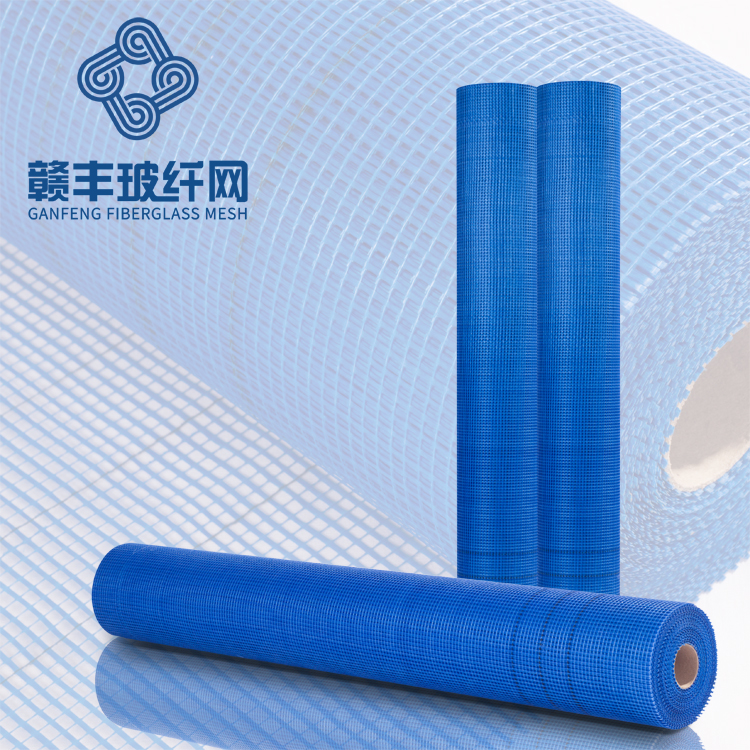
The production starts with melting silica sand into fine filaments. These filaments are woven into a grid-like mesh and then coated for protection. The coating protects the fibers from alkali damage, UV exposure, and moisture intrusion. At Ganfeng, they operate 150 rapier looms and 6 warp knitting machines to maintain precise weave density. Each batch is ISO 9001 certified, ensuring consistent quality. The process balances flexibility and strength, giving the mesh the ability to bend without breaking. It allows installers to handle and cut it easily while ensuring structural support in its embedded applications.
Manufacturing Step | Purpose |
Silica Melting | Produces ultra-fine glass filaments |
Filament Weaving | Creates grid structure for reinforcement |
Heat Treatment & Coating | Adds alkali, UV, and moisture resistance |
Quality Inspection | Ensures uniform tensile strength and ISO compliance |
Fiberglass Mesh is designed for durability and performance. It offers exceptional tensile strength, often several times higher than traditional reinforcement tapes. It stretches minimally, preserving shape under stress. Flexibility allows it to contour around corners, curves, and irregular surfaces. It also provides fire safety, helping surfaces resist heat exposure. Alkali resistance ensures it remains stable when embedded in cement or plaster, preventing degradation over time. Together, these properties make it ideal for both residential and industrial construction, including walls, floors, and exterior insulation systems.
● Tensile strength maintains structural integrity under pressure.
● Flexibility adapts to both flat and curved surfaces easily.
● Zero stretching keeps walls and floors aligned without deformation.
● Alkali resistance prevents chemical breakdown in cement environments.
The protective coatings applied to fiberglass mesh improve performance in different environments. PVC coating adds waterproofing, making it suitable for wet areas or exterior surfaces exposed to rain. Acrylic coating enhances adhesion to plaster, stucco, and cement substrates, ensuring a tight bond that minimizes movement. Polyurethane coating provides chemical resistance, ideal for industrial or harsh environments. These coatings combine durability and ease of installation, letting professionals embed the mesh quickly while ensuring long-term reliability. At Ganfeng, these coatings are applied uniformly, creating high-quality LUOBIAN products recognized worldwide.
● PVC: Protects from water and moisture damage, ideal for wet walls or floors.
● Acrylic: Improves bonding, ensures strong adhesion to plaster or cement.
● Polyurethane: Adds chemical and abrasion resistance for industrial applications.
ETAG Fiberglass Mesh is designed for exterior insulation finishing systems, known as ETICS or EIFS. It provides critical reinforcement for façade applications, ensuring walls resist cracking caused by environmental stress. The mesh is coated to resist UV and weathering, making it durable for long-term outdoor exposure. Builders often choose ETAG variants because they maintain structural integrity even in fluctuating temperatures and humidity. Ganfeng manufactures this mesh in precise rolls, combining high tensile strength and consistent weave for reliable installation.
● Certified according to ETAG standards for construction safety.
● Resistant to sunlight, rain, and temperature extremes.
● Ideal for both residential and commercial façade applications.
Feature | Benefit |
ETAG Certification | Meets strict European construction standards |
UV & Weather Resistance | Prevents degradation outdoors |
Tensile Strength | Maintains wall integrity under stress |
Roll Consistency | Simplifies large-scale installation |
ASTM Fiberglass Mesh meets the rigorous requirements of the American Society for Testing and Materials. It is ideal for projects that need high-load reinforcement and durability. Industrial and commercial projects often rely on ASTM mesh because it withstands heavy use and harsh environmental conditions. Ganfeng’s ASTM mesh rolls are carefully inspected to guarantee consistent strength and weave, making them a preferred choice for contractors who need predictable performance on every project.
● Ensures high tensile strength suitable for industrial applications.
● Compatible with cement, plaster, and tile adhesive systems.
● Provides long-term performance in commercial construction projects.
Stucco Fiberglass Mesh specializes in plaster and thin-coat stucco systems. It reinforces the base layer and prevents microcracks caused by shrinkage or thermal movement. Installers embed it between base and finish coats to create a durable, unified wall surface. The LUOBIAN brand by Ganfeng provides consistent mesh density and coating, which helps plaster adhere properly and resist cracking over time. Its lightweight structure allows easy handling and seamless integration into the surface.
● Prevents cracking in stucco and plaster systems.
● Maintains consistent thickness and weave during application.
● Supports interior and exterior wall finishes.
Ganfeng produces a range of other fiberglass meshes for specialized applications. Heavy-duty mesh reinforces wall bases in high-traffic areas, patch mesh fixes localized damage, microcement mesh strengthens thin decorative floors, and mosaic or tile mesh acts as a flexible backing for small tiles. They offer multiple weights and roll sizes to suit different project scales. Ganfeng ensures an annual production capacity of 150 million square meters, making these meshes available for both small and large projects worldwide.
Mesh Type | Typical Weight (g/m²) | Primary Application |
Heavy-Duty Mesh | 165–185 | High-traffic wall bases, impact areas |
Patch Mesh | 90–120 | Localized drywall or plaster repairs |
Microcement Mesh | 120–145 | Decorative thin floors |
Mosaic/Tile Mesh | Varies | Flexible backing for tiles or stone veneers |
Fiberglass Mesh strengthens walls, floors, and ceilings in home projects. It reinforces drywall joints, reducing cracks caused by thermal expansion or minor movements. In stucco applications, it provides a durable layer that resists microcracks, maintaining smooth finishes over time. Tile underlayment benefits from even weight distribution, lowering the risk of breakage. Microcement floors gain tensile support, keeping decorative surfaces intact and long-lasting. Many builders choose Ganfeng LUOBIAN mesh for its reliable performance and consistent quality.
● Bridges gaps and reinforces drywall seams for durability.
● Strengthens stucco layers, preventing microcracks.
● Stabilizes tiles and reduces flooring stress.
● Enhances microcement floor strength and longevity.
Industrial and commercial projects rely on Fiberglass Mesh to improve concrete slab durability, preventing shrinkage cracks under heavy loads. EIFS façades use it to strengthen adhesion between insulation boards and base coats, boosting resistance to environmental stress. Roofing and waterproofing systems incorporate fiberglass mesh to increase tensile strength and shield surfaces from water and UV exposure. Contractors value Ganfeng LUOBIAN mesh for consistent quality in large-scale applications.
● Reinforces concrete slabs against cracking and uneven stress.
● Improves EIFS façade adhesion and weather resistance.
● Strengthens roofing and waterproofing materials.
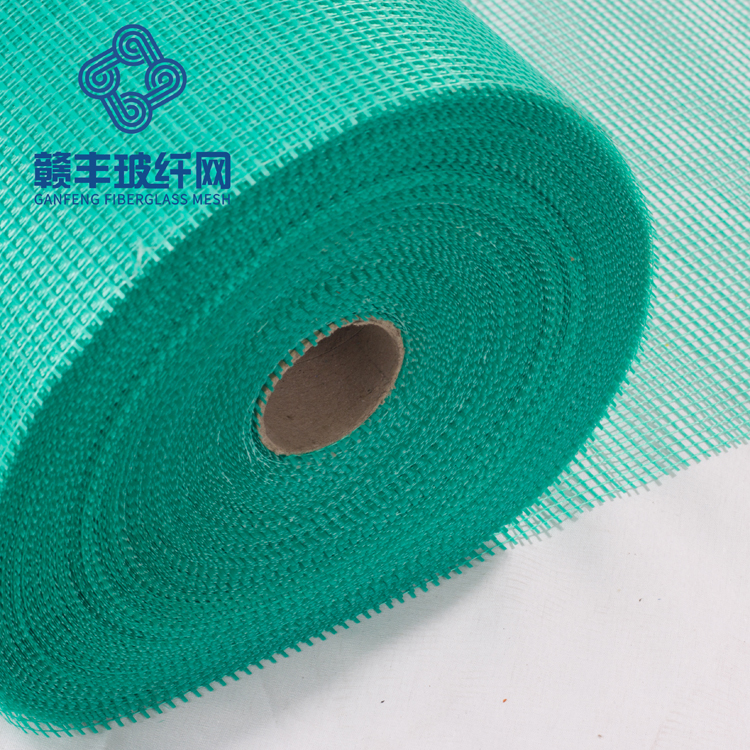
Fiberglass Mesh is used in automotive manufacturing to reinforce FRP composites for lightweight, durable car parts. It also functions in air and fluid filtration systems, capturing debris and protecting engines from damage. LUOBIAN mesh ensures uniform performance, combining high tensile strength with chemical resistance. Its ease of integration makes it a preferred choice for structural and functional components.
● Strengthens FRP panels while keeping parts lightweight.
● Captures debris in air and fluid systems to protect engines.
● Provides chemical resistance for long-term automotive performance.
In marine environments, Fiberglass Mesh strengthens hulls, molds, and waterproofing layers. Embedded in resin during boat lamination, it enhances impact resistance and overall structural integrity. Mesh also supports mold shapes during curing and reinforces waterproof membranes to prevent leaks. Ganfeng LUOBIAN mesh offers alkali and moisture resistance suitable for saltwater, ensuring long-lasting marine applications.
● Reinforces boat hulls against pressure and impacts.
● Supports molds for precise, durable resin parts.
● Strengthens waterproof membranes against leaks and corrosion.
● Maintains structural integrity in harsh marine conditions.
Fiberglass Mesh acts as a hidden backbone for walls, floors, and ceilings, bridging gaps between materials and reducing stress at joints. It helps plaster, stucco, and tile layers resist cracking over time, even when surfaces expand or contract due to temperature changes. Contractors often embed Ganfeng LUOBIAN mesh in high-stress areas to maintain structural integrity. Its high tensile strength ensures walls stay straight, ceilings remain stable, and floors can handle daily wear without damage.
● Bridges gaps and strengthens joints, reducing long-term cracking.
● Enhances wall and ceiling durability under environmental stress.
● Supports plaster, stucco, and tile applications for consistent finishes.
The interwoven structure of Fiberglass Mesh creates a mechanical key that improves adhesion between surfaces and applied compounds. It locks plaster, cement, or tile adhesives in place, preventing layers from separating over time. This stronger bond minimizes the need for repairs and ensures surfaces remain unified. Professionals often prefer LUOBIAN mesh from Ganfeng because it provides uniform weave and coating, which enhances adhesion across large areas.
● Mechanical key improves adhesion between layers.
● Reduces separation of plaster, cement, or tile adhesives.
● Provides a strong, unified surface over large installations.
● Ideal for high-traffic or exterior surfaces prone to movement.
Fiberglass Mesh is non-toxic, fully recyclable, and resistant to fire, mold, and rust. It does not release harmful VOCs, formaldehyde, or chemical residues, making it safer for indoor use. Its durability reduces the frequency of replacement, contributing to sustainability. Builders can use it in homes, offices, or commercial projects knowing it supports both safety and environmental responsibility. Ganfeng’s LUOBIAN mesh also meets international standards, ensuring reliable performance without compromising health or safety.
● Non-toxic and safe for indoor environments.
● Fire-resistant, mold-proof, and rust-resistant.
● Reduces maintenance and replacement frequency, supporting sustainability.
Environmental Feature | Benefit |
Non-toxic | Safe for indoor applications |
Fire-resistant | Enhances building safety |
Mold & rust resistant | Extends material lifespan |
Recyclable | Supports eco-friendly construction practices |
Fiberglass Mesh adapts to both flat and curved surfaces, making it useful across a wide range of applications. It performs well indoors and outdoors, in residential homes, industrial sites, automotive components, and marine environments. This versatility allows contractors to rely on a single material for multiple purposes, reducing the need for different reinforcement products. LUOBIAN mesh from Ganfeng ensures consistent quality, thickness, and coating, which simplifies planning and installation for long-term projects.
● Adapts to flat or curved surfaces easily.
● Suitable for indoor, outdoor, residential, and industrial projects.
● Works in automotive parts and marine structures.
● Reliable quality supports diverse applications across environments.
Choosing the correct Fiberglass Mesh starts with density and cell size. Density ranges from 90–330 g/m², affecting crack resistance and load distribution. Smaller cells, like 2×2 mm, suit fine repairs or decorative surfaces, while larger 10×10 mm grids reinforce heavy-duty floors or exterior walls. They help plaster, stucco, and tiles stay intact over time. Ganfeng LUOBIAN mesh ensures consistent density across rolls, giving predictable results for projects of all sizes.
● Low density (90–120 g/m²) works for patching and light finishes.
● Medium density (120–220 g/m²) suits standard walls and flooring.
● High density (220–330 g/m²) supports industrial or high-traffic areas.
The right roll dimensions improve efficiency and reduce waste. Roll widths usually range 1–2 m, lengths 50–100 m. Coatings enhance performance: PVC adds water resistance, acrylic improves adhesion, and polyurethane protects against chemicals and abrasion. LUOBIAN mesh provides uniform coating and weave for smooth installation in both small renovations and large industrial applications.
Parameter | Options & Benefits |
Roll Width | 1–2 m, easier handling and faster coverage |
Roll Length | 50–100 m, matches project scale |
PVC Coating | Water resistance, outdoor durability |
Acrylic Coating | Enhances adhesion to plaster, stucco, or cement |
Polyurethane Coating | Chemical and abrasion resistance |
Ensuring mesh quality is essential for long-lasting results. Look for uniform weave, consistent density, and proper coating. Ganfeng applies ISO-certified inspections for LUOBIAN mesh to guarantee reliable performance. Quality checks prevent weak spots, cracking, or adhesion failure, especially in high-stress walls or floors.
● Inspect weave for uniformity and tightness.
● Check for bubbles, stretched areas, or coating inconsistencies.
● Confirm ISO-certified production for consistent performance.
Fiberglass Mesh is stronger than polyester mesh, resists water and UV exposure, and does not burn easily. Polyester degrades faster outdoors and under stress. LUOBIAN mesh provides uniform reinforcement, making it ideal for EIFS, stucco, and industrial floors.
● Higher tensile strength for heavy-load applications.
● Excellent water and UV resistance.
● Fire-safe, non-combustible compared to polyester.
Feature | Fiberglass Mesh | Polyester Mesh |
Tensile Strength | High, supports heavy loads | Moderate |
Water/UV Resistance | Excellent, outdoor safe | Low, prone to degradation |
Fire Resistance | Non-combustible | Combustible |
Fiberglass Mesh lasts longer and prevents cracks in joints better than paper tape. It improves adhesion and keeps plaster or cement layers unified. Paper tape tears easily and fails under expansion, making fiberglass mesh a more reliable choice.
● Stronger and more durable for long-term use.
● Prevents cracks in high-stress areas.
ETAG, ASTM, or Stucco types suit different environments. ETAG works for exterior façades and EIFS, ASTM for industrial or commercial use, and Stucco mesh for thin-coat plaster. LUOBIAN mesh from Ganfeng ensures all variants meet quality standards and consistent performance.
● ETAG: Outdoor façades and insulation systems.
● ASTM: Heavy-duty industrial and commercial applications.
● Stucco: Plaster reinforcement, microcrack prevention.
● Indoor walls can use medium-density mesh; outdoor surfaces need ETAG-certified options.
● High-traffic floors or industrial sites require high-density LUOBIAN mesh.
● Microcement floors benefit from fine, flexible mesh for even reinforcement.
Fiberglass Mesh provides strong reinforcement for walls, floors, and façades. Ganfeng’s products deliver reliable durability and consistent performance, making construction safer and long-lasting across residential, industrial, and marine projects.
A: Fiberglass Mesh reinforces walls, floors, and façades, including ETAG Fiberglass Mesh for exterior insulation and Stucco Fiberglass Mesh for plaster systems.
A: ETAG Fiberglass Mesh is designed for façades and insulation systems, while ASTM Fiberglass Mesh meets industrial and commercial construction standards.
A: Fiberglass Mesh prevents cracks, improves adhesion, and offers long-lasting durability compared to paper tape.
A: Yes, Stucco Fiberglass Mesh is weather-resistant and suitable for exterior plaster and thin-coat systems.
A: Consider project type, density, and variant—ETAG, ASTM, or Stucco Fiberglass Mesh—for optimal reinforcement and performance.