Views: 0 Author: Site Editor Publish Time: 2025-11-13 Origin: Site


Ever wondered what makes walls and roofs stronger and more durable? Fiberglass Mesh is the secret behind it. This material combines strength, flexibility, and resistance to protect and reinforce structures.
In this post, you’ll learn what fiberglass mesh is made of, its key properties, and why it’s vital in construction and industry today.
Fiberglass mesh is a popular choice for reinforcing drywall and plaster joints. Unlike traditional paper tape, it won’t wrinkle or bubble when applied. Its self-adhesive nature makes installation quick and easy. The mesh strengthens joints by preventing cracks caused by structural movement or settling. This means walls stay smooth and crack-free longer. Around doorframes and ceiling joints, where stress concentrates, fiberglass mesh offers extra durability. For patching holes, it provides a solid base that holds joint compound firmly, reducing repair frequency.
In EIFS, fiberglass mesh is embedded in the basecoat layer to reinforce the insulation system. It helps resist cracking from temperature changes and mechanical impact. The mesh improves elasticity, allowing the system to flex without damage. This is crucial in high-rise buildings or earthquake-prone areas where movement is common. Denser meshes, typically 145g/m² or higher, are preferred for exterior walls to ensure long-lasting protection. By reinforcing the insulation layer, fiberglass mesh extends the lifespan of EIFS, maintaining facade integrity and appearance.
Fiberglass mesh plays a vital role in roofing waterproofing systems. It’s embedded within bitumen membranes or liquid coatings to act as a reinforcing skeleton. This reinforcement prevents cracks and splits caused by thermal expansion, contraction, or mechanical stress. It also enhances resistance to UV rays and wind uplift. Flat roofs exposed to harsh weather benefit greatly from mesh-reinforced membranes, which maintain waterproofing integrity over time. The mesh ensures the waterproof layer remains intact, protecting the building from water damage.
Under tiles or stone flooring, fiberglass mesh provides a flexible reinforcement layer. It distributes stress evenly across the surface, reducing cracking risks caused by movement or temperature fluctuations. This is especially important in radiant floor heating systems, where expansion and contraction occur regularly. The mesh supports floor leveling compounds and microcement finishes, enhancing durability. Including fiberglass mesh under tile installations helps maintain a smooth, crack-free surface that lasts for years.
In concrete and cement applications, fiberglass mesh improves tensile strength and crack resistance. It spreads loads more evenly, preventing localized stress points that cause fractures. This reinforcement is used in precast panels, bridge decks, and architectural concrete elements. During curing, the mesh reduces internal stresses, minimizing shrinkage cracks and waste. It also enhances impact resistance and durability, extending the service life of concrete structures. Fiberglass mesh is a lightweight alternative to steel rebar for some applications, simplifying handling and installation.
Tip: Always choose fiberglass mesh with alkali-resistant coating for cement-based projects to ensure long-term durability and prevent fiber degradation.
Fiberglass mesh is highly valued in fireproofing due to its non-combustible nature. It withstands extreme heat without melting or burning, making it ideal for protective clothing and gear. Firefighters’ jackets often include tightly woven fiberglass mesh layers to prevent flames from reaching the skin. Similarly, chemical workers use gloves and blankets reinforced with fiberglass mesh to resist heat and corrosive substances. This mesh acts as a durable barrier, enhancing safety in hazardous environments.
In agriculture, fiberglass mesh serves as an effective pest control barrier. It is woven into fine screens that allow air and light to pass while keeping insects, birds, and rodents out. Greenhouses and poultry farms rely on these screens for ventilation without compromising protection. The mesh’s corrosion resistance ensures long life even in humid, acidic, or chemically treated environments. Unlike metal screens, fiberglass mesh won’t rust or degrade, maintaining airflow and pest exclusion over time.
Civil engineers use fiberglass mesh as a geotextile to stabilize soil and prevent erosion on slopes, embankments, and roadbeds. Its flexibility and breathability allow water drainage while holding soil particles in place. The mesh reinforces retaining walls and embankments, reducing the risk of landslides or surface deformation. In areas prone to heavy rain or shifting terrain, fiberglass mesh helps maintain structural integrity of the landscape. It’s lightweight, easy to install, and resistant to UV and chemical damage, making it a reliable choice for long-term soil reinforcement.
Fiberglass mesh is a key component in reinforced composites used across automotive, marine, and aerospace sectors. It strengthens plastic and resin materials without adding much weight. In cars, it enhances body panels and interior parts for better durability and crash resistance. Boats use fiberglass mesh in hull construction to improve impact resistance and prevent water ingress. Aerospace manufacturers incorporate it into lightweight panels and structural components to boost strength while reducing fuel consumption. The mesh’s high tensile strength and corrosion resistance make it perfect for demanding environments where performance and safety are critical.
Fiberglass mesh is highly effective as a filtration medium. Its fine woven structure traps tiny impurities when water passes through, making it suitable for water filters in both residential and industrial settings. Unlike some metal meshes, fiberglass doesn’t corrode or rust, ensuring long-lasting performance in wet environments. Additionally, it serves as an excellent mosquito net material. The mesh allows air and light to flow freely while blocking mosquitoes and other insects, protecting homes and outdoor spaces from pests.
One key feature of fiberglass mesh used in filtration is its alkali-resistant coating. This coating prevents degradation when exposed to alkaline substances, common in water treatment or industrial filtration processes. Alkali resistance extends the mesh’s lifespan and maintains filtration efficiency over time. It also helps the mesh retain its strength and flexibility, even under chemical exposure. This makes alkali-resistant fiberglass mesh ideal for harsh environments where other materials might weaken or break down.
In industrial settings, fiberglass mesh is widely used in filtration systems for air, water, and chemicals. It filters out fine particles while resisting heat, chemicals, and moisture. Industries such as food processing, pharmaceuticals, and chemical manufacturing rely on fiberglass mesh filters to maintain product purity and protect equipment. The mesh’s durability reduces maintenance needs and downtime. Its lightweight nature also simplifies installation and replacement, saving time and labor costs.
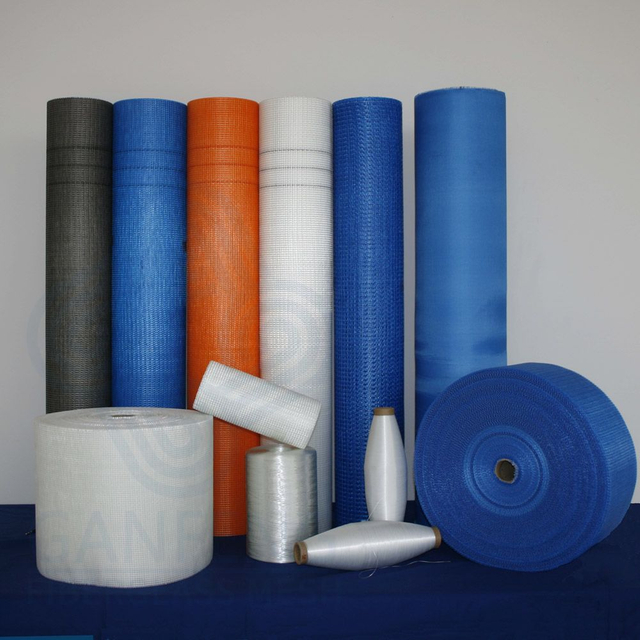
Fiberglass mesh stands out for its high tensile strength. It holds up well under stress, making it ideal for reinforcing walls, floors, and roofing. Polyester mesh, while flexible, generally has moderate tensile strength. Paper tape scores lowest in this area, as it can tear or degrade more easily under pressure. Fiberglass mesh resists cracking and breaking better than both alternatives, especially in demanding environments.
Fiberglass mesh offers excellent water resistance. Its alkali-resistant coating also protects it from moisture damage, making it suitable for wet or humid conditions. Polyester mesh provides moderate water resistance but may lose strength over time when exposed to constant moisture. Paper tape absorbs water easily, leading to swelling and weakening. Regarding UV protection, fiberglass mesh resists sun damage effectively, while polyester mesh has moderate UV resistance. Paper tape lacks UV protection and deteriorates quickly when exposed to sunlight.
Fiberglass mesh is non-combustible and can withstand high temperatures without melting or burning. This makes it a safer choice for fire-prone applications or where heat resistance is crucial. Polyester mesh and paper tape are combustible; they can catch fire and degrade under heat. Flexibility-wise, polyester mesh is very flexible, making it easy to work with on curved surfaces. Fiberglass mesh has moderate flexibility—enough for most construction needs but less than polyester. Paper tape is the least flexible, often creasing or tearing during installation.
Fiberglass mesh: Used in drywall reinforcement, EIFS, roofing membranes, tile underlayment, concrete reinforcement, fireproofing gear, and industrial filtration due to its strength, durability, and resistance properties.
Polyester mesh: Common in filtration systems, printing screens, and applications requiring high flexibility but less structural strength.
Paper tape: Mostly found in drywall finishing for easy corner finishing and simple joint taping where high strength or moisture resistance is not critical.
Fiberglass mesh is primarily made from silica-based glass fibers, making it recyclable. When processed properly, it can be melted down and reused in manufacturing new glass products or composite fillers. This capability helps reduce waste and supports circular economy principles in construction and industrial sectors. Additionally, fiberglass mesh production generally consumes less energy compared to metals like steel, lowering its carbon footprint. Choosing fiberglass mesh contributes to more sustainable building practices by reducing reliance on non-renewable resources and minimizing landfill disposal.
Fiberglass mesh is non-toxic and safe for use in residential, commercial, and institutional settings such as schools and hospitals. Importantly, it contains no asbestos or harmful fibers, which historically caused health issues in construction materials. This makes fiberglass mesh a safer alternative for reinforcement and filtration applications. It does not release hazardous dust or fibers during normal handling or installation, ensuring a healthier indoor environment. Its chemical inertness also means it won’t emit volatile organic compounds (VOCs) or other pollutants over time.
Despite its safety, fiberglass mesh requires careful handling. The fine glass fibers can cause mild skin irritation or itching if touched directly. To prevent discomfort, workers should always wear gloves, long sleeves, and protective eyewear when cutting or installing mesh. Using dust masks is advisable during sanding or cutting drywall reinforced with fiberglass mesh to avoid inhaling airborne particles. Proper disposal of scrap mesh also reduces exposure risks. Training on safe handling practices helps maintain worker health and ensures compliance with occupational safety standards.
Fiberglass mesh is a favorite among artists and model makers. Its lightweight, flexible grid provides a strong framework for sculptures, large or small. Artists often shape the mesh into the desired form, then cover it with plaster, resin, or clay. This creates a durable shell that holds fine details well. Because fiberglass mesh doesn’t warp or tear easily, it supports complex shapes and textures. For model makers, the mesh acts as a skeleton that reinforces paper mache or foam structures, preventing cracks and breaks over time. It’s especially handy for stage props that need to be sturdy yet lightweight for easy handling.
Fiberglass mesh proves invaluable in many DIY home repairs. It strengthens cracked walls, patched holes, and damaged plaster. When applied over a repair area, it bonds tightly with joint compound or cement, distributing stress evenly. This prevents new cracks from forming. Homeowners use it to reinforce drywall joints, especially around doors and windows where movement is common. It also works well under tile or stone flooring to prevent cracking due to shifting or temperature changes. For outdoor projects, fiberglass mesh can reinforce stucco or cement surfaces, extending their lifespan. Its ease of use and strong adhesion make it a go-to for quick, lasting fixes.
In art installations and theatrical productions, fiberglass mesh is a versatile material for creating lightweight yet strong structures. Artists use it to build large-scale installations that need stability without excessive weight. The mesh can be molded into curves or sharp angles, then coated with materials like plaster or fiberglass resin for a finished look. Stage designers rely on it to craft props that endure repeated handling and transport. Fiberglass mesh’s resistance to moisture and wear makes it ideal for outdoor art displays or long-running shows. It also allows for fast fabrication, saving time during production.
Fiberglass mesh is widely used for reinforcing drywall, roofing, EIFS, and concrete due to its strength and durability. It also plays a key role in fireproofing, filtration, and industrial applications because of its heat resistance and chemical stability. Innovations continue to improve its flexibility and alkali resistance, enhancing performance in harsh environments. For best results, select mesh weight and coatings suited to your project. Ganfeng offers high-quality fiberglass mesh that ensures long-lasting protection and versatile use across industries.
A: Fiberglass mesh is used to reinforce drywall joints, exterior insulation systems, roofing membranes, tile underlayment, and concrete to prevent cracks and improve durability.
A: Fiberglass mesh is stronger, self-adhesive, won’t wrinkle, and resists moisture and cracking better than paper tape.
A: It reinforces bitumen membranes, preventing cracks from thermal expansion and enhancing UV and wind resistance.
A: Yes, especially alkali-resistant types that withstand moisture, UV exposure, and alkaline cement environments.
A: Prices range from $20 to $50 per roll depending on weight and coating.