


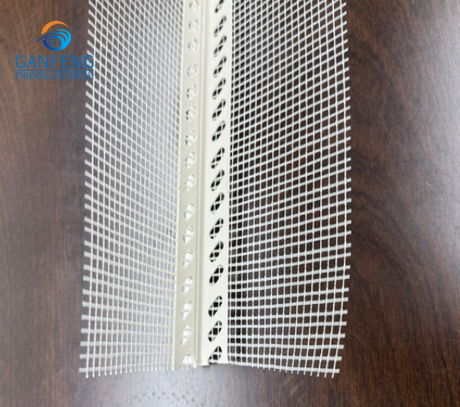
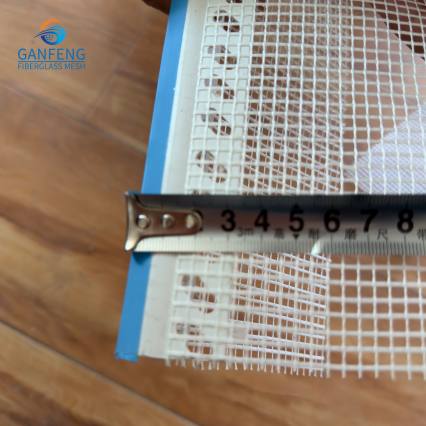
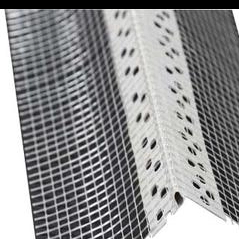


A bead that looks correct in a catalog can be unusable on site if its nose stands proud of the specified plaster, its mesh wings are too narrow to overlap the field reinforcement, or its length does not fit the reveals. Contractors should convert the wall detail into measurable purchasing requirements before requesting a quote. A physical sample installed in the actual base coat often exposes a mismatch faster than a list of generic advantages.
Start with the wall, not the SKU
Identify interior drywall, gypsum plaster, cementitious render, or external insulation. Record the substrate, corner angle, finish thickness, exposure, and approved reinforcement system. A bead labeled “for drywall” should not automatically be placed in a cement-based exterior render. Likewise, a bead with alkali-resistant mesh does not by itself establish approval of the entire wall system.
Jiangxi Ganfeng Fiberglass Mesh Co., Ltd. offers a PVC bead product range that can be narrowed by application. Its right angle mesh bead is explicitly described as 90-degree and 2.5 m; those particulars should be matched to the project drawing rather than generalized to every profile.
Turn the drawing into a purchase schedule
| Check | Ask the supplier | Verify on sample |
|---|---|---|
| Profile | Angle, nose height, leg dimensions, length, and tolerances. | Straightness and fit under intended finish. |
| Mesh wings | Width each side, aperture, mass, coating, attachment method. | Adhesion and specified overlap to field mesh. |
| Material | PVC grade and suitability for exposure; mesh alkali resistance. | No damaged, brittle, or distorted parts. |
| Delivery | Pieces per carton, labeling, packing, lot traceability. | Count and inspect a representative carton. |
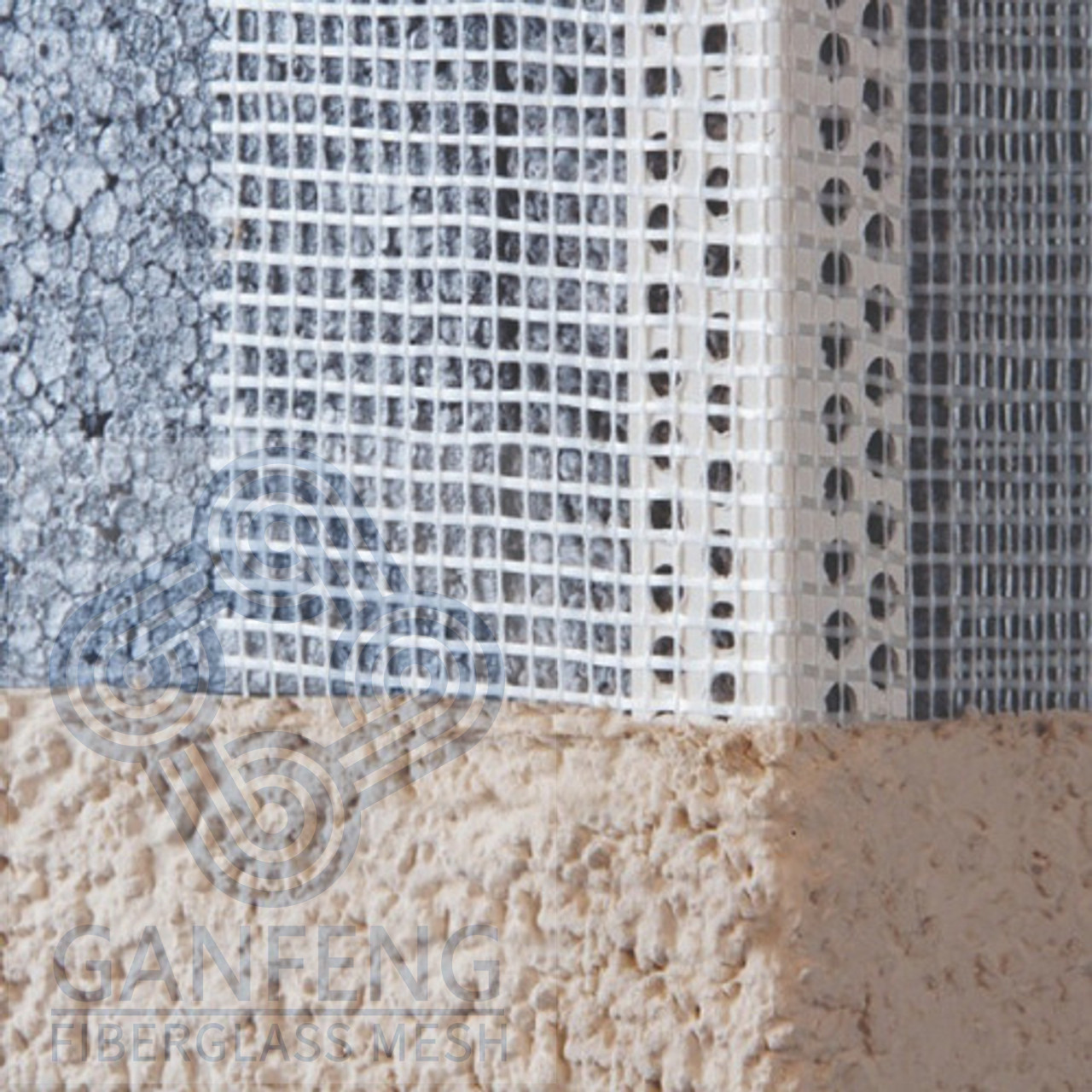
Calculate lengths from the takeoff, accounting for cuts, returns, and permitted joints. Define whether a mix of lengths is acceptable. Long profiles can bend during handling; packaging should protect the nose and mesh attachment. Include a retained approved sample and a lot-identification requirement in the order.
Test the interface before approving bulk supply
Embed a sample at the planned depth and inspect whether the mesh remains flat, wets through, and overlaps adjacent reinforcement as required. Check that the corner stays aligned after the coating is drawn level. Drywall compound and cementitious base coat are different materials, so perform the trial in the specified mix. Keep the finished sample for comparison with incoming stock.
The drywall protection bead is described at 2.5 m, while the alkali resistant bead emphasizes a different material consideration. Request variant-specific technical drawings and reports before treating the descriptions as equivalent.
Common purchase mistakes
- Ordering on profile length and price without checking finish depth.
- Specifying “mesh included” without separate wing widths and attachment quality.
- Ignoring angle deviations, curved details, drip edges, and movement joints.
- Accepting a sample from one variant and delivery from another.
- Assuming an isolated material claim proves system or regulatory compliance.
Build the schedule from site measurements
Walk the project before choosing a catalog item. Count external corners, reveals, soffit returns, short sections, and interfaces with movement joints. Measure floor-to-ceiling heights and the longest uninterrupted run. Note where the drawings call for a different bead, such as a drip edge or flexible movement profile. A single bulk length can create waste or too many joints when the building has mixed dimensions.
Specify whether joints may fall at visible locations and how adjoining lengths are aligned. Some projects require continuous pieces at prominent openings; others permit a concealed joint. Include cutting waste based on the actual takeoff rather than a generic percentage. Request the supplier's packing dimensions before committing to long lengths, since access routes, elevators, storage, and site handling can constrain what arrives intact.
Specify the profile in measurable terms
Angle and nose
Record the nominal angle and acceptable deviation. Many corners are drawn at 90 degrees but built slightly out of square; a rigid profile forced over the substrate may spring away or leave a thick bedding pocket. Check the actual wall before ordering an off-angle solution. State nose height and intended finish thickness together. The nose should establish the line without leaving an exposed ridge or requiring excessive material to hide it.
Legs and mesh attachment
Measure each leg and mesh wing separately. Symmetric and asymmetric wings serve different geometry around reveals. State the required overlap into field mesh as defined by the system, then confirm that the selected wing can achieve it without folding or running into a frame. Examine how the fabric is attached to the PVC profile: it should remain secure through cutting, transport, and embedding. A wide wing that detaches during handling is less useful than a correctly attached wing of the specified width.
Fabric and polymer
For cementitious base coats, ask for the mesh construction, coating, and evidence of alkali durability under the applicable method. The word “alkali resistant” by itself gives no test edition, result, or acceptance criterion. Request a suitable PVC grade for the intended interior or exterior exposure and any project-specific temperature or UV requirements. A generic claim about plastic cannot establish the exact profile's suitability.
Match attachment to substrate
Drywall board, cement board, masonry, and insulation systems require different bedding and fixing details. Identify whether the approved method uses compound, mortar, adhesive, staples, or another attachment. Do not move a fastener pattern from drywall onto an insulation board without approval. The profile must be supported continuously enough to stay straight, but the installation must also permit the specified coating to bond through or around its wings.
At a window reveal, check how the mesh meets the frame seal and adjacent diagonal reinforcement. At an outside corner, verify the field mesh overlap and whether the wing needs to wrap around the edge. At a movement joint, stop and use the designed movement detail. These are interface questions; the most accurate product dimensions will not compensate for a conflicting wall detail.
Qualify a sample before the purchase order
- Ask for the exact proposed product code, cross-section, length, mesh specification, and drawing revision.
- Inspect straightness, color consistency where relevant, nose shape, and bond between wing and profile.
- Cut a representative section with the site method and check for tearing or detached mesh.
- Install it in the specified compound on the actual substrate and finish to design thickness.
- Record the approved sample, installation method, and any adjustment in the purchase schedule.
After the sample is approved, prevent silent substitutions. The order should identify the approved profile code, drawing revision, material, mesh wing, length mix, quantity, packaging, and lot markings. Where a buyer permits equivalents, specify the review procedure and who can authorize a change. A photograph of a similar white corner bead is not enough to establish equivalence.
Receiving and storage controls
Inspect a representative selection of cartons before distributing them to crews. Count lengths, compare labels with the order, measure a few profiles, and look for crushed noses, bent sticks, frayed wings, or detached fabric. Keep profiles supported and protected from deformation according to the supplier's storage instructions. Separate variants clearly if multiple lengths or nose heights are delivered to the same project.
Document a discrepancy immediately with carton labels, lot code, measured dimensions, and photos of the condition. Isolate affected material until the contractor and designer decide whether it meets the approved schedule. Mixing an unapproved substitute into installed work makes later inspection much harder. The same approach applies to a change in mesh coating or wing construction that is not obvious from a quick glance.
Estimate installed cost rather than stick price
Compare the unit cost alongside cutting waste, separate mesh needed, labor to embed the bead, storage loss, and inspection. A profile with attached mesh may reduce one handling step, but only when its wings satisfy the system detail. An inexpensive profile that requires trimming every wing, extra mortar to bury its nose, or replacement after transit may be more costly installed. Use the site sample to estimate those effects rather than assuming an advertised time saving.
Finally, keep performance claims within the documentation. A bead labeled for drywall is not automatically qualified for an exterior insulation system, and a product title containing a standard name is not a full approval. Request the applicable test report, system acceptance, and profile drawing for the specific item on the order. This turns the buying checklist into an auditable installation decision.
Make the request for quotation unambiguous
Attach the drawing and sample approval record to the request for quotation. Ask suppliers to quote the exact proposed code, not merely “PVC corner bead with mesh.” Require deviations to be listed line by line: angle, nose, wing widths, length, mesh type, coating, packing, or lead time. An empty deviation statement should mean the offer matches every named requirement, subject to the supporting evidence.
Compare offers in the same unit. A price per piece cannot be compared with a price per meter without accounting for length and waste. Ask whether cartons contain mixed lengths and whether protective packaging is included. If a contractor orders material for several phases, identify whether later lots will use the same construction and how changes will be communicated.
Define the approval gate before deposit or shipment. The design team may need a physical sample and system-holder acceptance; procurement may need a signed drawing; site staff may need a mock-up. Put these milestones in the schedule so review time is not mistaken for supplier delay. The purchase order should then mirror the approved sample rather than rely on an informal discussion. Keep a signed comparison sheet with the order and make it available to the receiving inspector.
If the project has a fire, impact, or other regulated performance requirement, ask for evidence covering the exact assembly and market. A component-level material statement does not certify the installed wall. Keep the relevant report with the order and avoid transferring claims from a different wall system. This preserves a clear boundary between what the bead itself does and what the assembly has demonstrated.
Conclusion
Successful procurement begins with the installed wall detail. Define angle, nose, mesh wings, exposure, finish thickness, and overlap; then trial the offered profile and retain a comparison sample. Confirm pack protection and lot traceability before approving quantity. Jiangxi Ganfeng Fiberglass Mesh Co., Ltd. is a manufacturer and supplier of PVC bead options, but each selected version should match the contractor’s approved system and measurable acceptance criteria.
FAQ
What mesh-wing width should a PVC corner bead have?
Use the overlap and corner detail specified by the wall-system designer; a universal wing width cannot be inferred from the bead name.
Can one bead work for drywall and EIFS?
Only if the exact product and its attachment are approved for both finishing systems.
Should contractors order extra length?
Base the allowance on takeoff, permitted joints, cutting pattern, and anticipated site damage rather than an arbitrary percentage.
What should receiving inspection include?
Compare labels, lengths, profile geometry, wing widths, and condition with the retained approved sample and purchase schedule.

